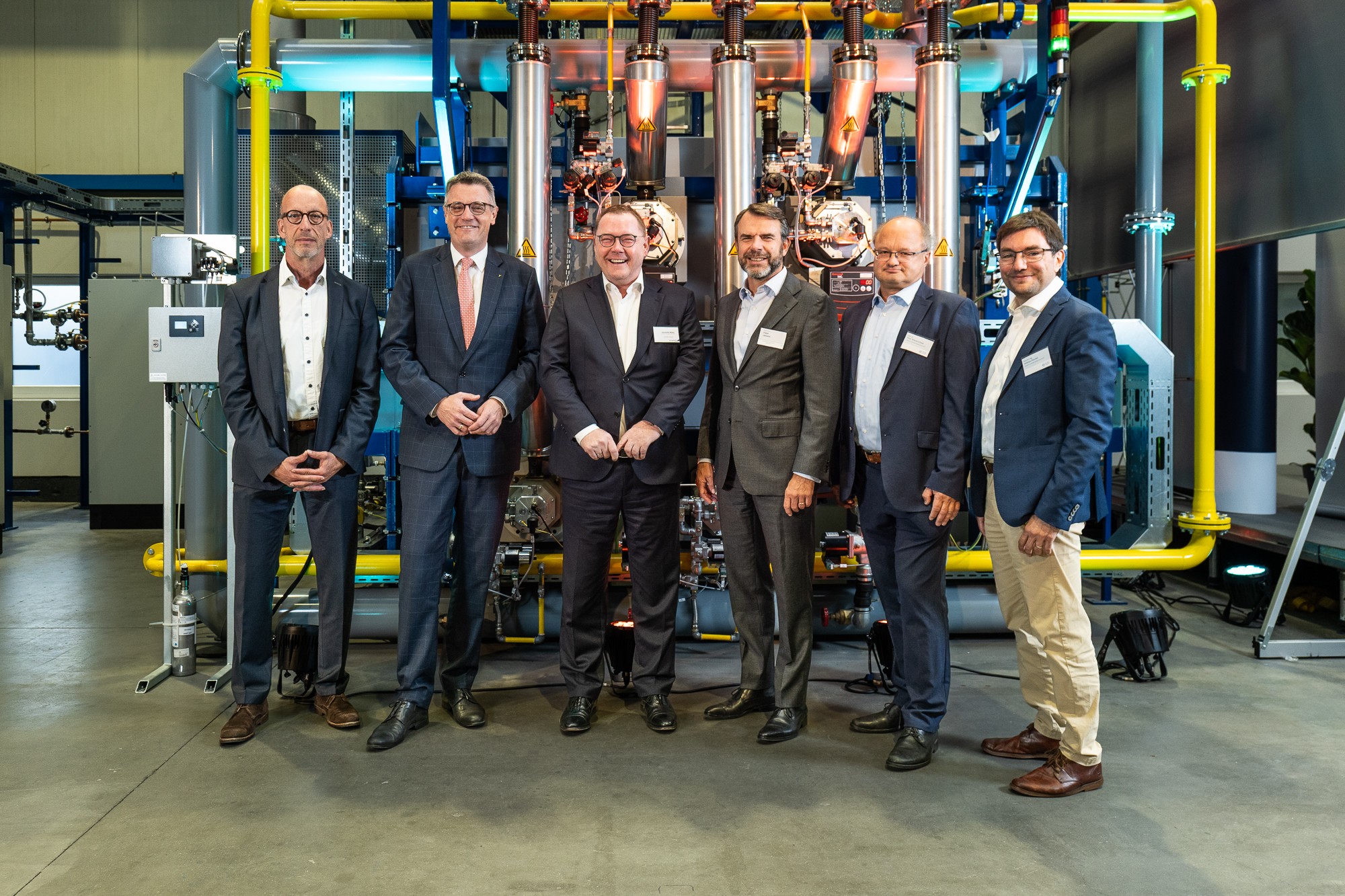


Around one in seven tonnes of CO₂ emissions in Germany is generated by the production of process heat for industry. Hyca Heat, a start-up recently spun out of Forschungszentrum Jülich, aims to demonstrate a new, hybrid and more climate-friendly approach to supplying industrial heat.
The name “Hyca” combines the terms hybrid and catalytic. As a first step, the company is planning to build a demonstration plant for use in the regional paper industry. The Hyca Heat system uniquely offers two alternative ways of generating process heat – in this initial case, for paper drying.
The system is based on specially coated heating wires. Heat can either be produced electrically, in which case the system operates essentially like an industrial-scale hair dryer. Alternatively, it can utilise catalytic combustion: a process in which a fuel gas reacts with oxygen on the catalytic surface of the wires and burns without a flame.
Catalytic combustion produces significantly fewer pollutants, as it avoids nitrogen oxide emissions typically associated with flame-based processes. When climate-neutral fuels such as green hydrogen are used, the process itself becomes CO₂-neutral. The same applies when renewable electricity is used for electric heating.
Flexibility as a key advantage
“Our goal is to offer customers maximum flexibility and security of supply on their path towards climate-friendly process heat – while keeping costs as low as possible,” explains chemical engineer Dr Simon Hahn, one of the three founders of Hyca Heat. He began working on process heat technologies during his doctoral research at the Institute for a Sustainable Hydrogen Economy (IHE) at Forschungszentrum Jülich.
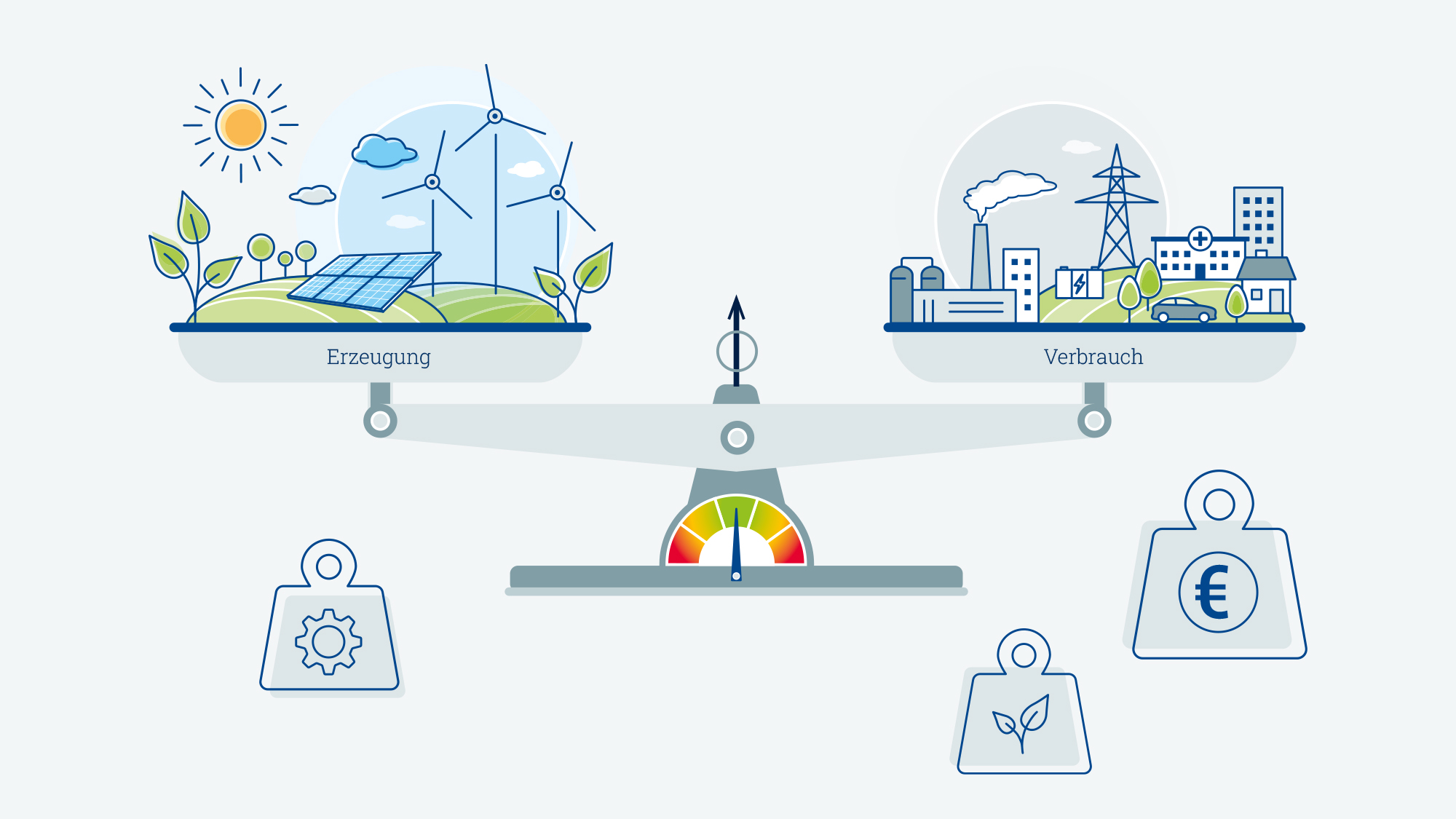
The system allows users to switch between different energy sources, ensuring maximum flexibility. They can dynamically choose the most cost-effective option, supported by proprietary control software. In the near term, this will often mean switching between electricity and natural gas. However, the system is fully compatible with alternative fuel gases such as green hydrogen, which can be used without any technical modifications.
This transition pathway aligns with long-term projections by the German Environment Agency and the Fraunhofer Institute for Systems and Innovation Research (ISI). According to these models, the share of fossil fuels in process heat is expected to decline by more than 40% by 2035, assuming constant heat demand. Electricity and hydrogen, which currently play a minor role, are set to significantly expand their contribution.
Covering a wide temperature range
Hyca Heat’s technology covers a broad temperature range from around 30 to 1,000 degrees Celsius. This opens up applications across a wide range of industries, from food and textiles to paper production, large-scale chemical processes and metalworking.
Beyond its potential to significantly reduce greenhouse gas emissions, the system offers another important advantage: precise temperature control. Unlike conventional flame-based combustion, the Hyca Heat system allows users to target specific temperature levels with high accuracy.

Building partnerships for scale-up
The founding team – consisting of Dr. Simon Hahn, physicist and software developer Dr. Richard Büssow, and management and marketing expert Henning Hatje – is currently building its core team. The company is recruiting engineers in software development and process engineering.
The first major milestone is the construction of the demonstration plant in an industrial paper production environment. Initial planning is already in place, with detailed engineering to follow.

Hyca Heat is actively seeking innovative partners and pilot customers. Companies interested in shaping the future of industrial heat are encouraged to get in touch at contact@hycaheat.com.
The copyright for the images used on this website is held by Forschungszentrum Jülich, aligator kommunikation GmbH and stock.adobe.com.