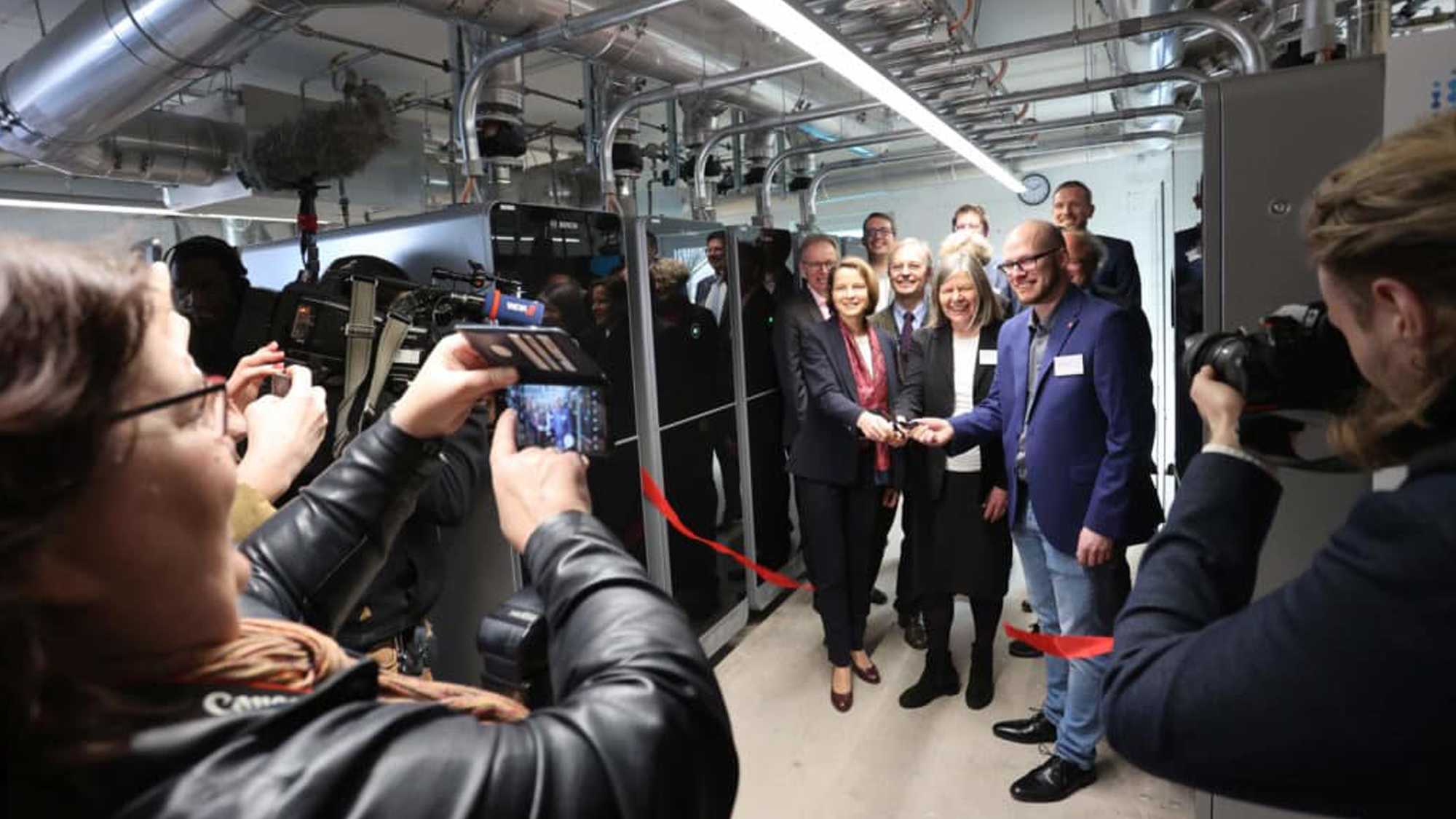


A heavy-duty crane has lifted Reverion’s fuel-cell power plant into place at Hermann-Josef Hospital in Erkelenz. With the installation of the striking green container, the HC-H2 hydrogen demonstration project Multi-SOFC has reached an important milestone. The next steps are the technical connection and commissioning of the system.
The power plant is visible from afar: the container is painted in Reverion’s signature vivid green, with the company name displayed above it in large white letters. The “Reverion M-100/250” power plant is regarded as the most efficient fuel-cell power plant of its kind in the world. It can convert up to 80 per cent of the energy contained in a fuel gas directly into electricity. Comparable systems achieve efficiencies of up to 65 per cent. The system is based on solid oxide fuel cell technology (SOFC), which converts hydrogen or natural gas into electricity and heat with particularly high efficiency.

Saving 128 tonnes of carbon dioxide
The technology offers particular advantages for Hermann-Josef Hospital. Hospitals need large amounts of electricity and heat around the clock. The heat generated during operation can be used directly on site. In future, the Multi-SOFC technologies are expected to cover around 20 per cent of the hospital’s energy demand and save about 128 tonnes of carbon dioxide each year. Germany’s Federal Ministry of Research, Technology and Space is funding Multi-SOFC with €23.6 million.
Once the power plant has been installed and commissioned, the decisive phase of the project will begin. Next year, the partners will combine the fuel-cell power plant for the first time with hydrogen storage technology from Hydrogenious LOHC NRW GmbH.
SOFC meets LOHC
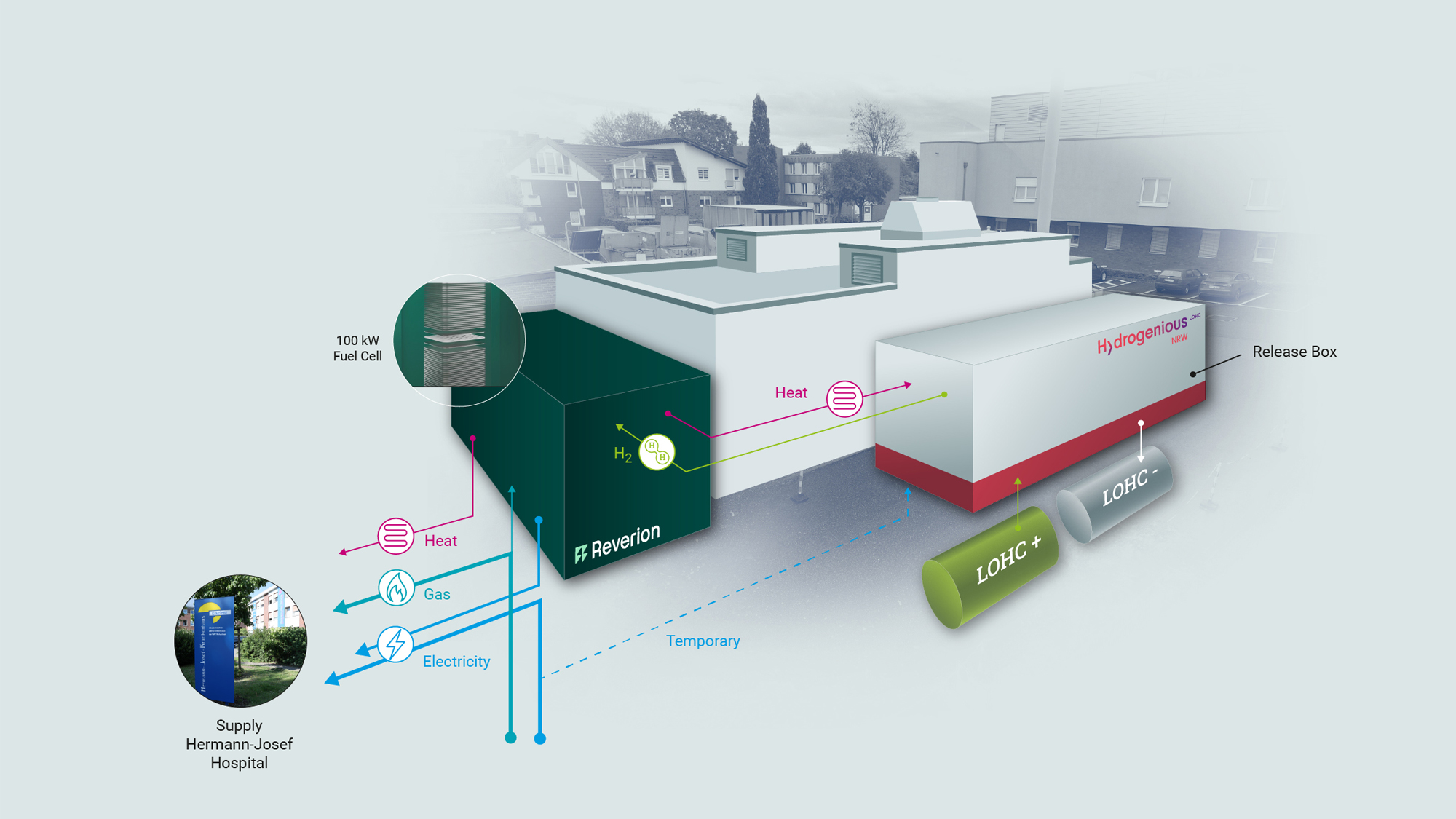
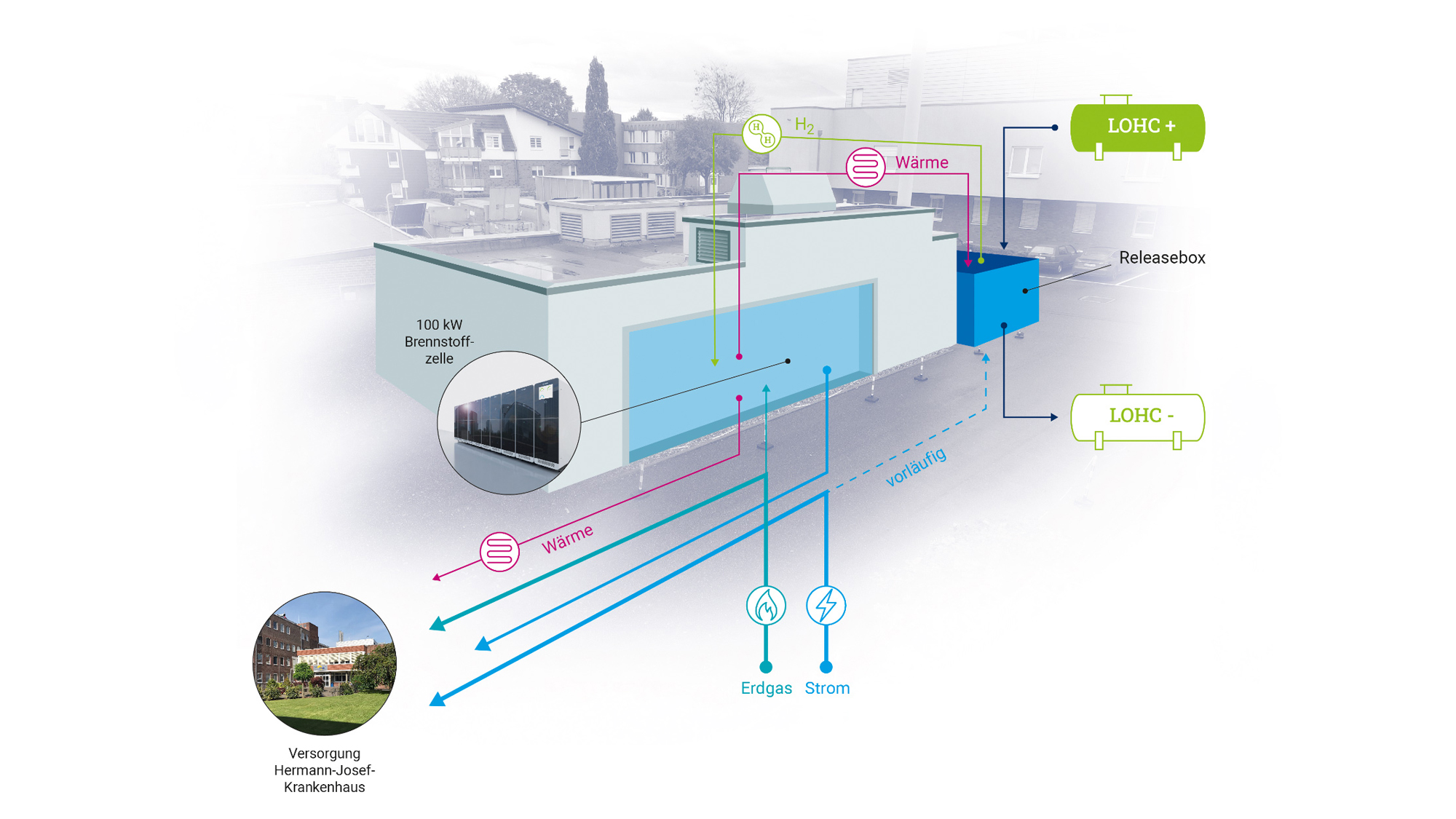
The infrastructure required for this has already been prepared on the hospital site. In future, underground tanks will store hydrogen which is chemically bound to a carrier oil, a liquid organic hydrogen carrier (LOHC). In this form, hydrogen can be handled as easily as diesel: it is non-explosive, hardly flammable, and can be stored and transported at ambient temperatures and normal pressure. Tanker trucks [US1] will deliver the LOHC loaded with hydrogen and then return the dehydrogenated carrier material for reloading. The next milestone at the hospital will be the installation of the dehydrogenation unit, the Release Box, which will be responsible for supplying the hydrogen stored in the LOHC to the fuel cell and making it usable.
The research therefore focuses on how the two technologies work together. The project partners are investigating whether the waste heat from the fuel cells can be used directly for the hydrogen release process. If successful, this could further increase the energy efficiency of the overall system.
The copyright for the images used on this website is held by Forschungszentrum Jülich, aligator kommunikation GmbH and stock.adobe.com.