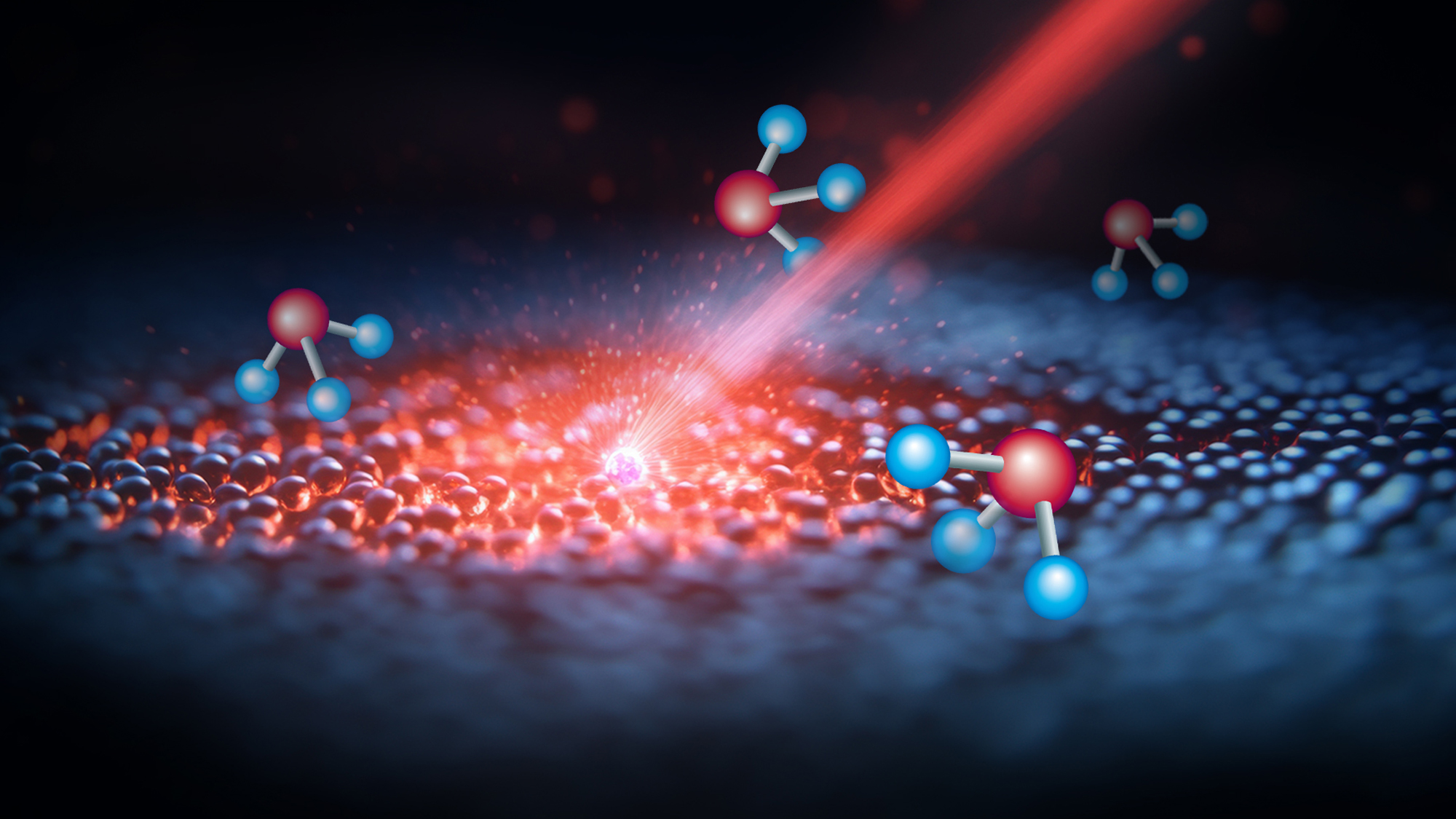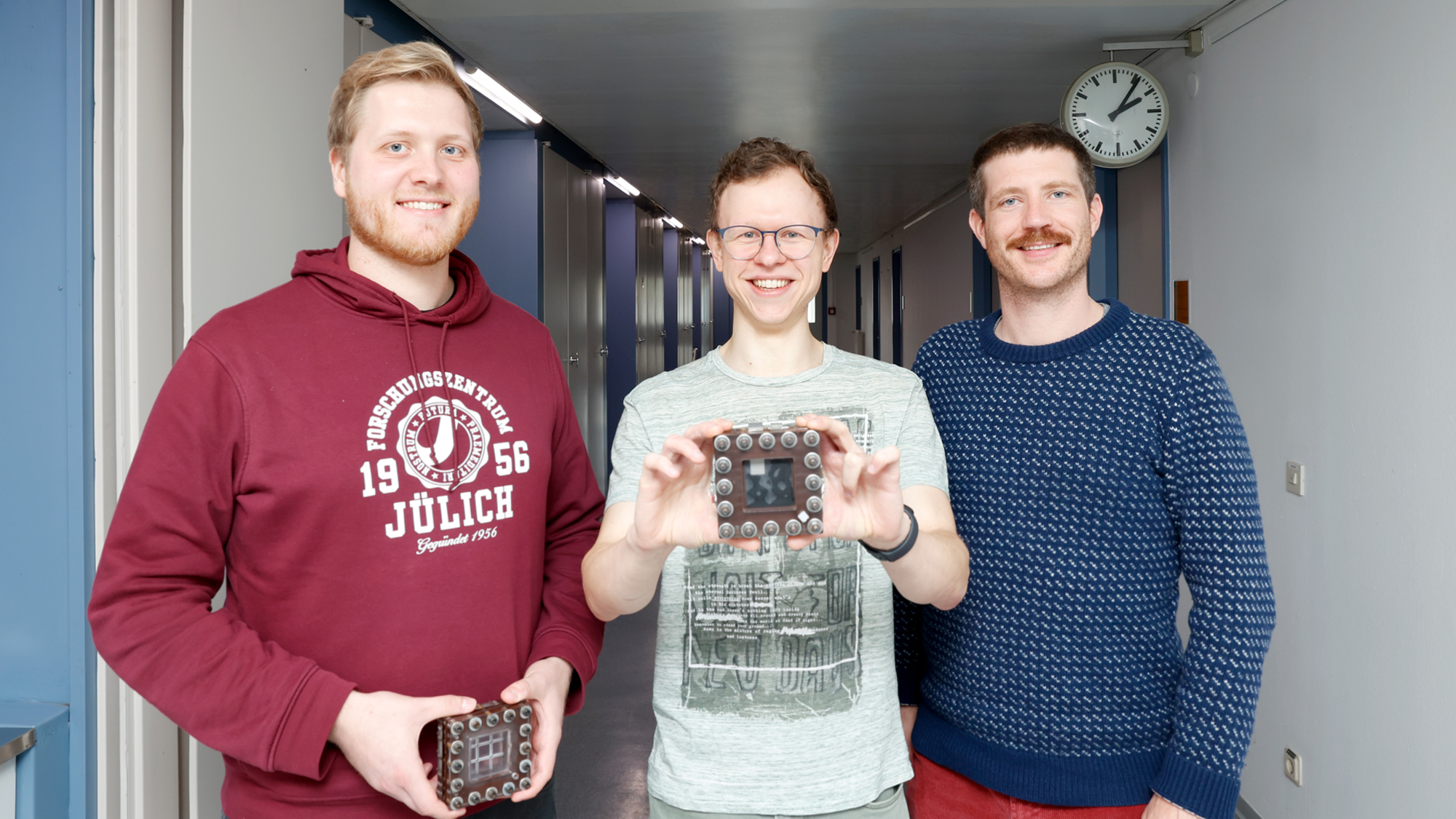

A bacterium discovered by a research team from the University of California in the mid-1980s in the Gulf of Naples has a remarkable property. “Thermogata neapolitana is a real glutton – and it produces hydrogen of exceptionally high purity,” says Prof. Nils Tippkötter, a bioprocess engineer at the Jülich campus of Aachen University of Applied Sciences, who is working on harnessing this capability.
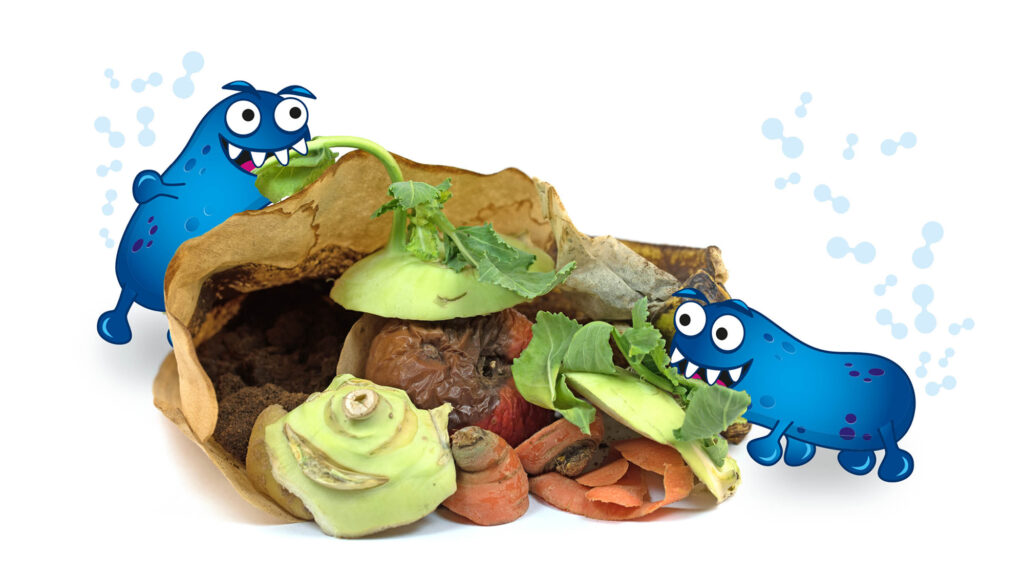
The recipe for hydrogen production à la Thermogata sounds simple: take a stirred tank reactor, heat the nutrient solution containing the rod-shaped bacterium to 77 degrees Celsius – and add anything made of sugar or sugar-related molecules. “Thermogata neapolitana eats almost any organic matter. It happily digests grasses, hedge clippings, organic household waste, beet residues – and especially paper or organic textile scraps,” explains Tippkötter.
What happens when the bacterium is kept at its favourite temperature of 77 degrees Celsius and is fed? The process engineer explains: from each glucose molecule it releases four hydrogen molecules. “That is the absolute upper limit. That is why Thermogata neapolitana is such an efficient extractor.” This is particularly striking with paper waste. Paper consists of cellulose – a long chain of sugar units.
From one tonne of paper waste, the bacterium produces more than 600 kilowatt-hours (kWh) of energy stored in hydrogen, plus around 1,400 kWh in biogas. It also generates a pasteurised, nutrient-rich compost. Potato peelings and straw are also almost completely converted.
The process is simple to handle, partly because of the bacterium’s affinity for heat, which it brings from its natural habitat: in the Gulf of Naples, the shallow seabed is heated by the volcanic activity of Mount Vesuvius, creating hot springs. “In the stirred tank, the process can be kept sterile rather easily. At 77 degrees Celsius, hardly any native microbes survive,” Tippkötter notes.
Some Like It Hot
A distant relative of the Neapolitan bacterium leaves its own mark on the region – the smell of rotten eggs at Aachen’s hot springs. The distinctive odour is created as water flows through underground rock layers rich in sulphur. A bacterium reduces sulphur compounds to hydrogen sulphide (H₂S), which then rises with the thermal water. A bacterium that generates energy at extreme temperatures by reducing sulphur – this was precisely the type of organism the researchers in the Gulf of Naples had been searching for.
“Microbial hydrogen production is promising, but it is not a silver bullet,” says Tippkötter. “Its potential lies mainly in decentralised applications where large amounts of organic residual materials are already available.” The bacterium therefore occupies a niche – but that is no disadvantage. Today’s energy system also works because it offers solutions for many niches.
The niche suited to Thermogata neapolitana and other bacteria that thrive at high temperatures and generate energy through their activity looks roughly like this: in a region where agriculture and the paper industry are strong, what these gluttons and high-yield degraders produce offers greater value than previous waste disposal methods.
“In future, agriculture may face rising demand for hydrogen because batteries are not always suitable for heavy farm machinery,” Tippkötter explains. Agriculture is decentralised; fields will not suddenly be located next to hydrogen production facilities or pipelines. “If my required feedstock in the form of biowaste costs me nothing – or even saves money because I avoid disposal costs – then hydrogen prices below three euros per kilogram produced through bacterial degradation could be achieved quite quickly,” says the Jülich professor. Compost and biogas further improve the overall balance.

“Intermediate steps are needed, and someone has to finance them.”
Prof. Nils Tippkötter, Professor of Bioprocess Engineering and Downstream Processing at Aachen University of Applied Sciences, Jülich Campus
Better Energy Efficiency Than Electrolysis
The technology relies on components that are already commercially available, and existing infrastructure such as biogas plants could largely be reused. From an energy perspective, the process is worthwhile: producing one kilogram of hydrogen with an energy content of 33 kWh requires only 15 kWh input. By comparison, a study from the Fraunhofer Institute for Wind Energy Systems (IWES) states that, in theory, 42 kWh would be needed, and in practice around 55 kWh, to produce one kilogram of hydrogen with a PEM electrolyser (PEM = proton-exchange membrane). Another advantage of hydrogen production using bacteria is that no climate-damaging emissions are released.
Hyperthermophilic bacteria are still barely used – the pressure to switch to climate-friendly energy sources has not yet become great enough. As a result, there are currently no efforts to scale laboratory systems. “You cannot scale up directly from one litre to 100,000 litres. Intermediate steps are needed – and someone has to fund them,” Tippkötter notes.
The next step forward will come next year: the four-year SynelGas project will begin. A mobile, container-based hydrogen plant with a reactor volume of 800 litres will be built. Together with partners from agriculture and the energy sector, Tippkötter and his team will operate and further develop the system under real-world conditions. They aim to demonstrate that the tiny bacterium Thermogata neapolitana also works reliably in large industrial-scale systems.
The copyright for the images used on this website is held by Forschungszentrum Jülich, aligator kommunikation GmbH and
stock.adobe.com.