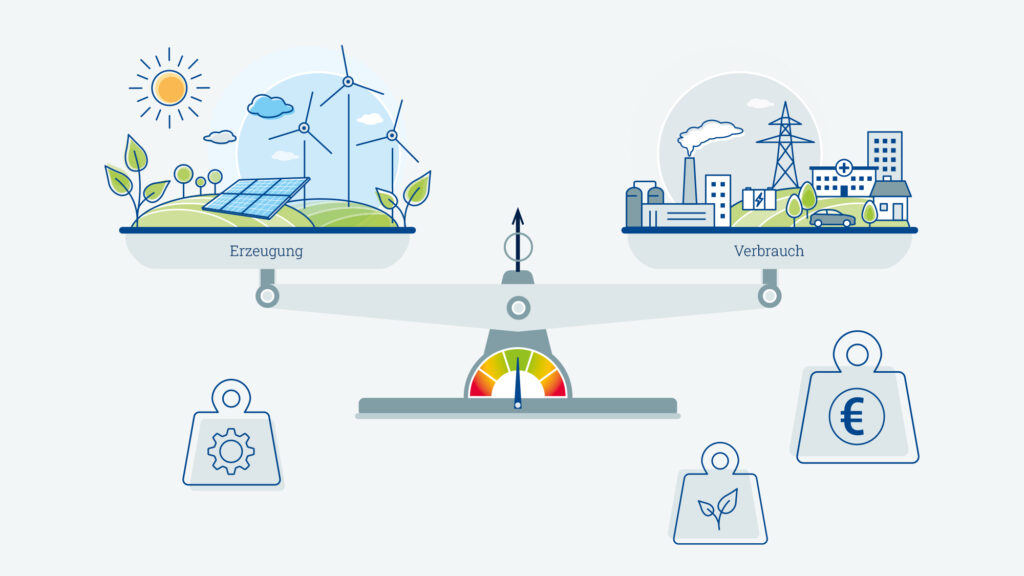
Initially, there will be an imbalance between energy production and demand in the future because solar radiation and wind cannot be planned. For this reason, the future system must be designed to be flexible in terms of load.
Load flexibility is essential for our climate-friendly energy future. While the sun and wind provide clean electricity, they do not always deliver when we need it most. Unlike natural gas, they cannot simply be turned up or down. Therefore, the energy system must become load-flexible – able to respond in a way that allows energy generation and consumption to continue to align, even though future inputs may fluctuate. Some of the fluctuations that renewables bring with them can be mitigated by storage technologies. Batteries and hydrogen storage complement each other well as buffer stores. But to convert the fluctuating input into a stable output, we need further innovation.
“Load flexibility is a central prerequisite for efficiently and cost-effectively integrating renewable energy into the energy system,” says Dr. Sarah Deutz, who leads the expert team “New Methods of Process Synthesis” at the Institute for a sustainable Hydrogen Economy in the Process and Plant Engineering (IHE-4) division at Forschungszentrum Jülich. Despite buffer storage, facilities, such as those synthesising ammonia, still need to handle varying loads and pressures. “This presents many challenges. At the same time, load flexibility can help reduce the costs of green ammonia or green methanol, because we can make optimal use of inexpensive renewable electricity.”
Sarah Deutz speaks of conflicting goals. One example: In West Africa, a hydrogen production system based on electrolysis from renewable energy could work well, as there is inexpensive, constant green electricity and enough land available. However, if the electrolysis – the splitting of water into hydrogen and oxygen using electricity – results in a water shortage for agriculture, the price is too high. Additionally, load flexibility could lead to higher technical demands and increased material costs. “An energy transition that is technically feasible but so expensive that only a few can afford it will not work,” describes Sarah Deutz, highlighting a crucial conflict of interest.
A Stress Test for Machines and Materials
For the material, load flexibility presents particular challenges. A car that regularly cruises with cruise control at 110 km/h experiences less material wear, despite higher mileage, than one that is constantly braking and accelerating. The same is true for energy converters – devices that transform electricity into chemical energy or vice versa. “Regular load changes stress the construction and materials more than constant operation,” explains Sarah Deutz.
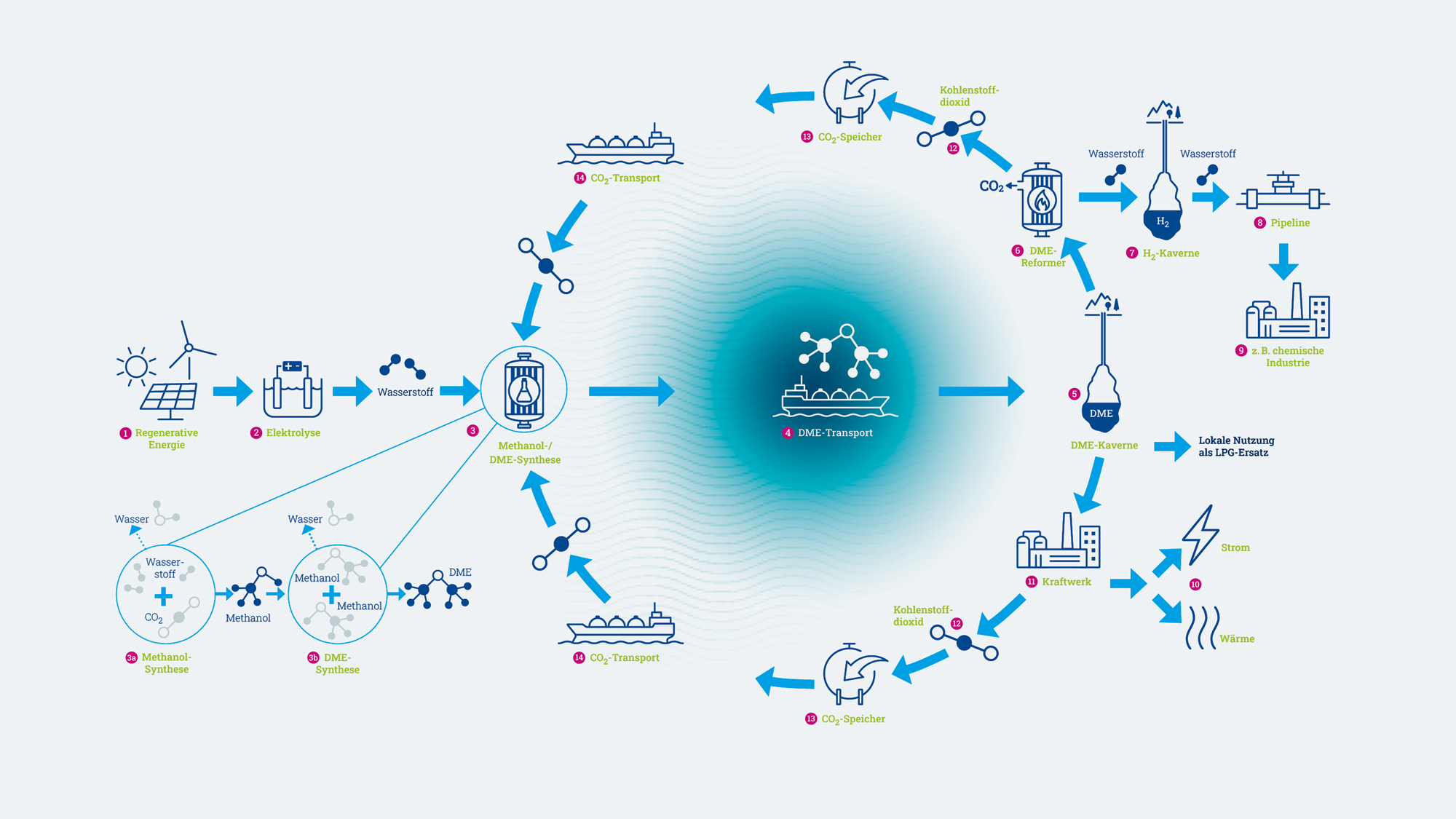
An example illustrates how crucial load flexibility will be for the future hydrogen economy: methanol, CH₃OH. In a complex process, methanol synthesis, three hydrogen molecules (3 H₂) react with one carbon dioxide molecule (CO₂) to form methanol and water (H₂O). Methanol is a readily storable, lightly volatile liquid that is already well known. The hydrogen contained within it is much more compact and easier to transport: One litre of methanol corresponds to 1,100 litres of gaseous hydrogen. Methanol is also an important intermediate step in the production of dimethyl ether.
Green Fluctuations
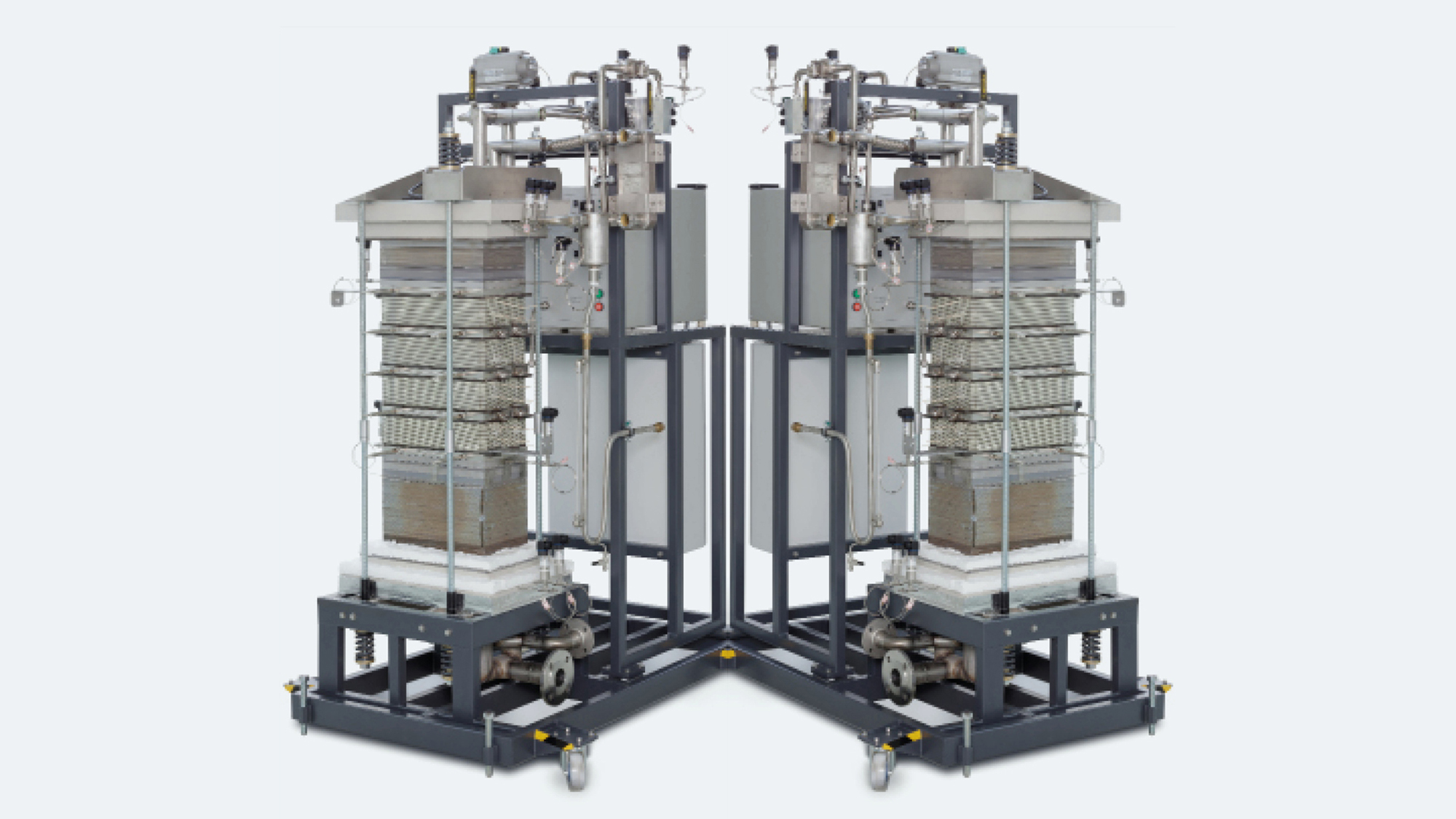
The path to green methanol is not easy. It is based on green hydrogen, and therefore on green electricity. “As the amount of green electricity fluctuates, flexible operation of the electrolyser is required. This accelerates the aging processes of the materials,” explains Sarah Deutz. The same applies to the subsequent processes on the way to methanol. Hydrogen and carbon dioxide are mixed and heavily compressed. The compressor must be flexible, as must the reactor in which the heated gas mixture then reacts with the help of a catalyst to form methanol. The methanol is then cooled so that it condenses into a liquid. Finally, the raw methanol is purified in a distillation plant.
All of these steps are subject to fluctuations caused by the green electricity. “We need to weigh up to what extent we ride out electricity fluctuations. Frequent load changes can accelerate aging processes. It may therefore make sense to switch off the electrolyser at very low load to preserve the material. Each system needs its own balance. That’s why we plan load flexibility from the outset, tailored to the location,” says Sarah Deutz.
Chemical hydrogen carriers like methanol are very cost-effective storage options and thus enable decoupling of load-flexible production from consumption. “Methanol is easy to store in large quantities. For the processes based on methanol, we can imagine large methanol stores that allow us to operate the following processes at a consistent load,” explains Sarah Deutz, highlighting another advantage of chemical hydrogen storage such as methanol or ammonia: They alleviate the complex issue of load flexibility and enable a more affordable energy transition.
The copyright for the images used on this website is held by Forschungszentrum Jülich, aligator kommunikation GmbH and stock.adobe.com.
Current
A Glutton and an Extractor
May 13, 2026
A bacterium discovered by a research team from the University of California in the mid-1980s in the Gulf of Naples has a remarkable property. “Thermogata
In the future energy system, the availability of green electricity will fluctuate significantly – at times plentiful, at other times scarce. To balance supply and
“If you have visions, you should go to the doctor” – this phrase, famously uttered by former Chancellor Helmut Schmidt during the 1980 federal election
An important milestone in the development of the Institute for Sustainable Hydrogen Economy (IHE) at Forschungszentrum Jülich has been reached; not yet in stone and
The first stone has been laid for one of the most important structural change projects in the Rhineland mining region. North Rhine-Westphalia’s Minister President Hendrik
Discussion with the NRW-SPD parliamentary group about the environmentally friendly energy economy of the future Experts invited to a political talk show usually have differing