The HC-H2 and the structural change municipality of Eschweiler express interest in network cooperation.
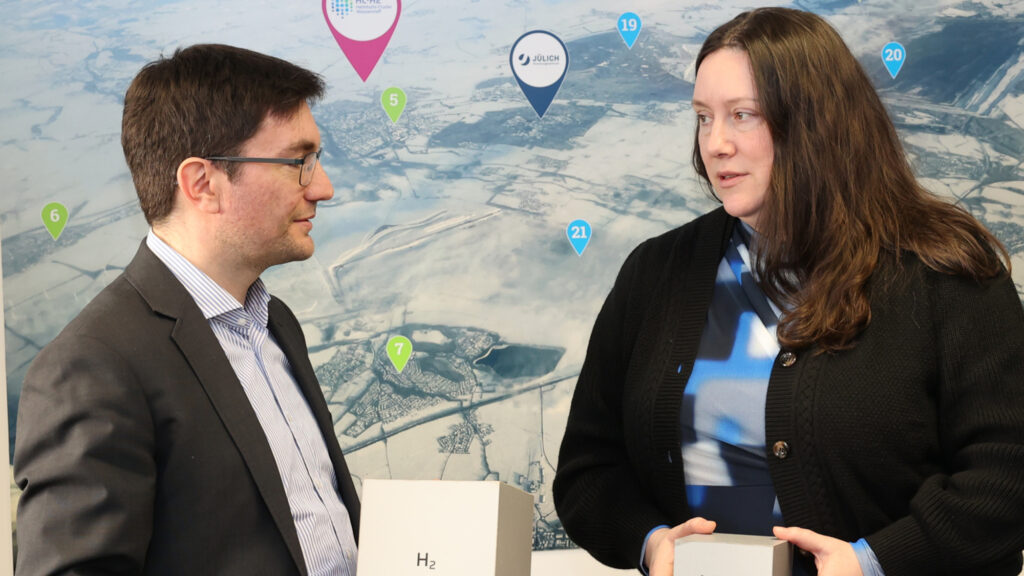
Structural change in the Rhenish mining area is not a mission for lone fighters. The mayor of the town of Eschweiler, Nadine Leonhardt (SPD), and Prof. Andreas Peschel, Director of the Institute for Sustainable Hydrogen Economy (INW) at Forschungszentrum Jülich, have now emphasized this once again. Nadine Leonhardt visited Jülich to talk to Peschel and the staff of the Helmholtz Cluster for a Sustainable and Infrastructure-Compatible Hydrogen Economy (HC-H2). The INW forms the organizational core unit of HC-H2. The cluster will grow in the coming years through cooperation with other partners. These can come from industry, business, research or administration.
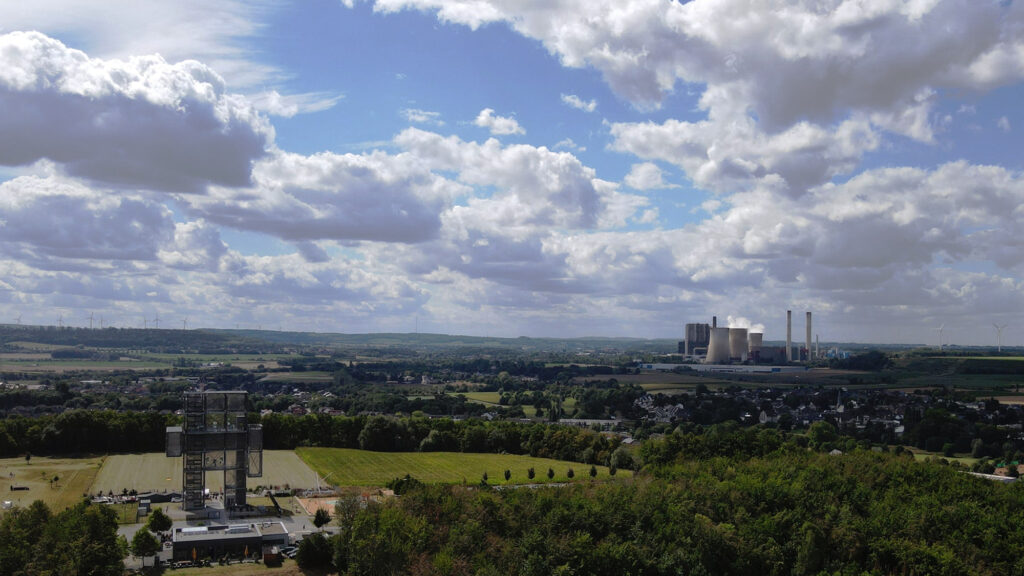
There has not yet been any direct cooperation between the city of Eschweiler and HC-H2. “Our cluster is still being established. We are in the process of building a network,” says Andreas Peschel. “The city of Eschweiler certainly has a prominent position in the Rhenish mining district. It is located in the core area, is adjacent to the Inden open-cast mine and, with the Weisweiler power plant, is a power plant site. It is logical that we should establish a close exchange.” Especially as the topic of structural change is nothing new in Eschweiler. The Eschweiler Bergwerksverein was one of the major players in the mining of hard coal.
“What we do now is important”
“What we do now is important for the major issues of climate change and structural change. We are now setting the course,” says Andreas Peschel, explaining that the economic future of the Rhenish mining area also depends on the decisions made in the coming months and years.
This is because the mining of lignite in the Inden, Hambach and Garzweiler opencast mines will end by 2030 at the latest. By then, it must be clear where the new economic power that will replace the old backbone will come from. “We all have to make sure that we create new, attractive jobs. And we need feasible alternatives for the energy supply of the future,” Andreas Peschel specifies the task.
Eschweiler is right in the middle of it all
The city of Eschweiler, which is one of the largest municipalities in the core area with more than 56,000 people, is right in the middle of these challenges. “We are open to new technologies and smart solutions for the future,” says Nadine Leonhardt. The city is already following the transformation path from fossil fuels to renewable energy supplies – even if the path is not always easy, as the mayor explains.
“After all, we are not only a city undergoing structural change, but also a flood city,” she says, referring to the mammoth task of repairing the city after the floods in summer 2021. This disaster hit Eschweiler and the neighboring town of Stolberg particularly hard in the Rhenish mining area. The costs for reconstruction in Eschweiler alone are in the three-digit million range. Added to this is the structural change, which for Eschweiler means that new jobs have to be created to counterbalance the loss of the lignite-fired power plant.
“We are taking an optimistic approach,” reports Nadine Leonhardt. “We have a good location, close to the Autobahn 4 and not far from important institutions such as Forschungszentrum Jülich and RWTH Aachen University. We want to be interesting for sustainable start-ups, for example,” she says. This requires clever management and good contacts. After all, the city does not have an unlimited amount of space available for new commercial settlements.
The HC-H2 and the city of Eschweiler therefore want to work together in the future to generate more added value. “Hydrogen is one of the major topics of the future in the energy industry. We are a location for the energy industry and have recognized that hydrogen will also play an important role here,” explains Nadine Leonhardt.
The copyright for the images used on this website is held by Forschungszentrum Jülich, aligator kommunikation GmbH and
stock.adobe.com.