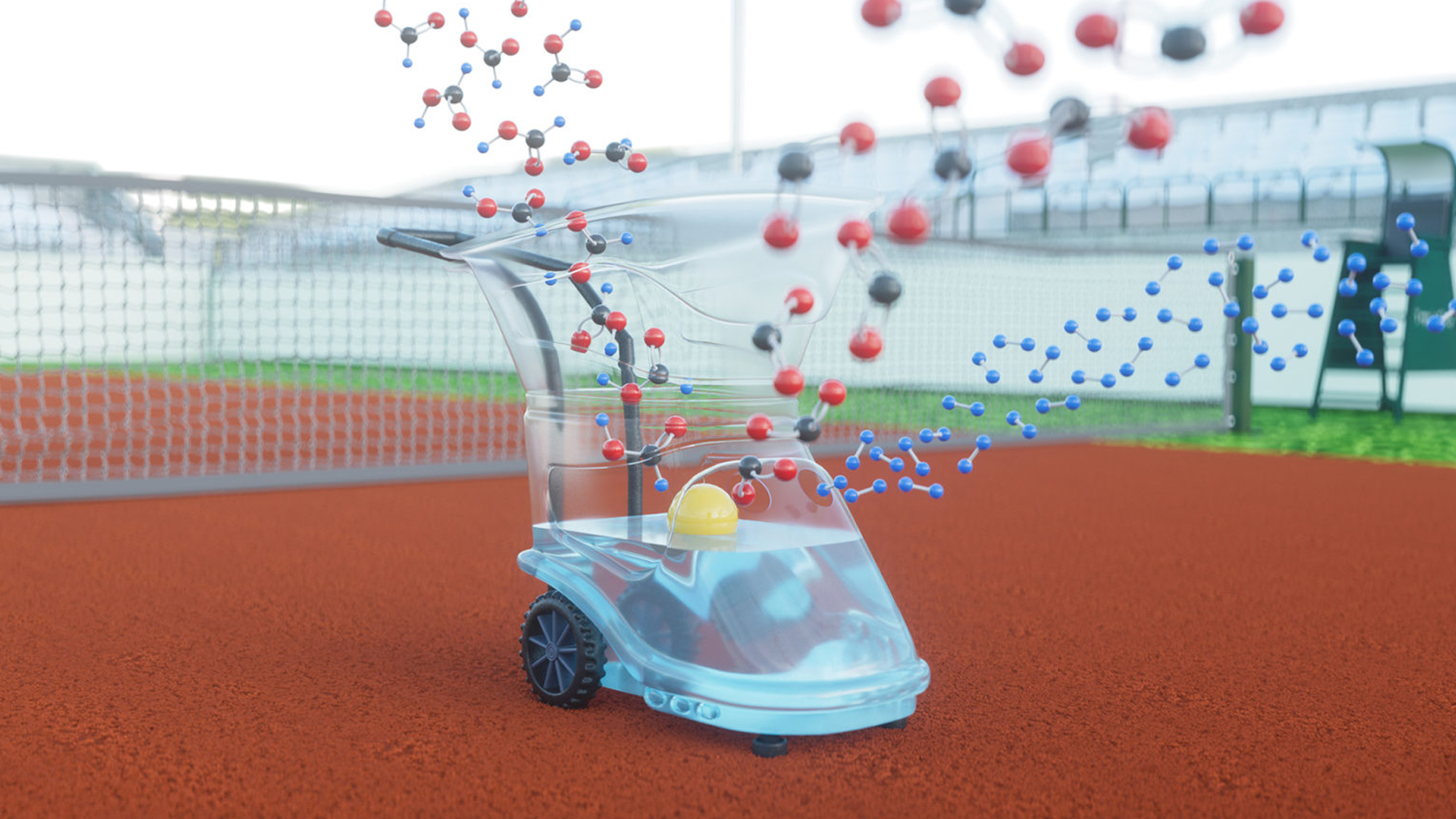

Liquid organic hydrogen carriers are set to become even more sustainable. In a new research focus at the Institute for a sustainable Hydrogen Economy (IHE), researchers at Forschungszentrum Jülich are investigating storage molecules made from biogenic waste that offer additional advantages.
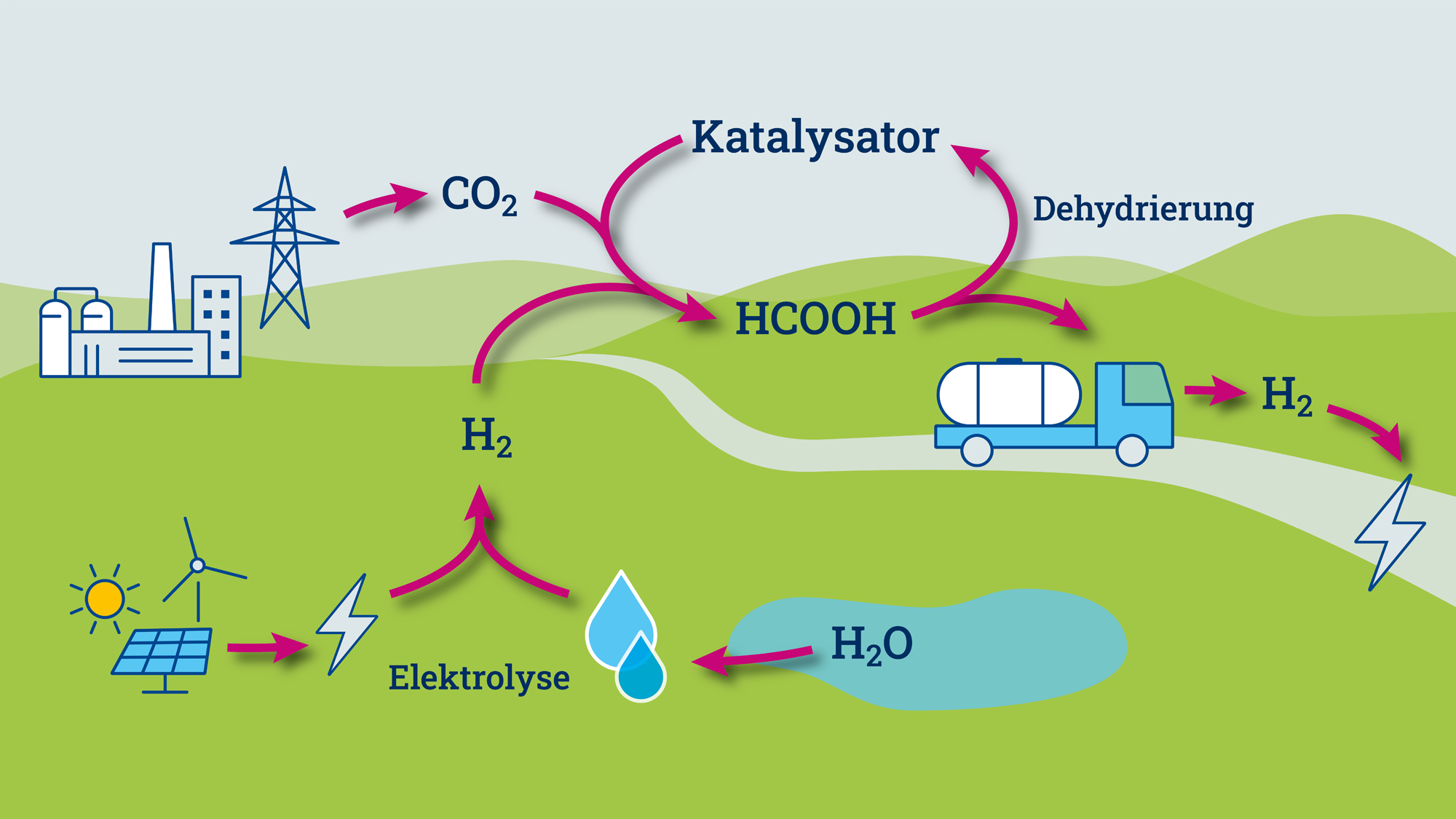
These carrier substances, known as liquid organic hydrogen carriers (LOHCs), can be stored and transported almost as easily as liquid fuels. At the same time, they have the special ability to absorb and release substantial amounts of hydrogen. This is also referred to as chemical hydrogen storage. The carrier liquid itself is not consumed during these processes and can be reloaded after discharge.
In this new research focus, Jülich scientists are turning their attention to a new generation of hydrogen carriers that can be produced from plant residues and other biogenic waste materials. “Carriers based on renewable feedstocks make chemical hydrogen storage significantly more attractive and sustainable,” says Professor Peter Wasserscheid. The IHE director is regarded as one of the key pioneers of LOHC technology.
Low-cost catalysts
The new biogenic carriers promise a further advantage: copper alone is sufficient as a catalyst to release hydrogen from the carrier molecule. This was shown in a study by a Chinese research team, published in summer 2025 in the prestigious journal Nature Energy and commented on by Peter Wasserscheid.
A catalyst is a substance that enables or accelerates a chemical reaction. Other systems, by contrast, usually require far more expensive precious metals such as platinum. The biogenic carrier molecules also make it possible to release hydrogen at significantly lower temperatures. That cuts costs, as does the use of the cheaper catalyst material.
“What matters now is, first, identifying the best catalytic pathway for producing these carrier molecules from biogenic waste materials. Second, we are developing new copper catalysts to make loading and unloading even more efficient,” explains Professor Regina Palkovits, also a director at the IHE, who is responsible for developing innovative catalyst concepts for the new research focus.
A source of hope for the Rhenish mining area
The questions involved are not only of scientific interest; they also offer considerable practical potential for value chains in the Rhenish mining area. The research focus is therefore also known as “Sweet-LOHC”. The local sugar industry generates large volumes of residual materials that could be used in production.

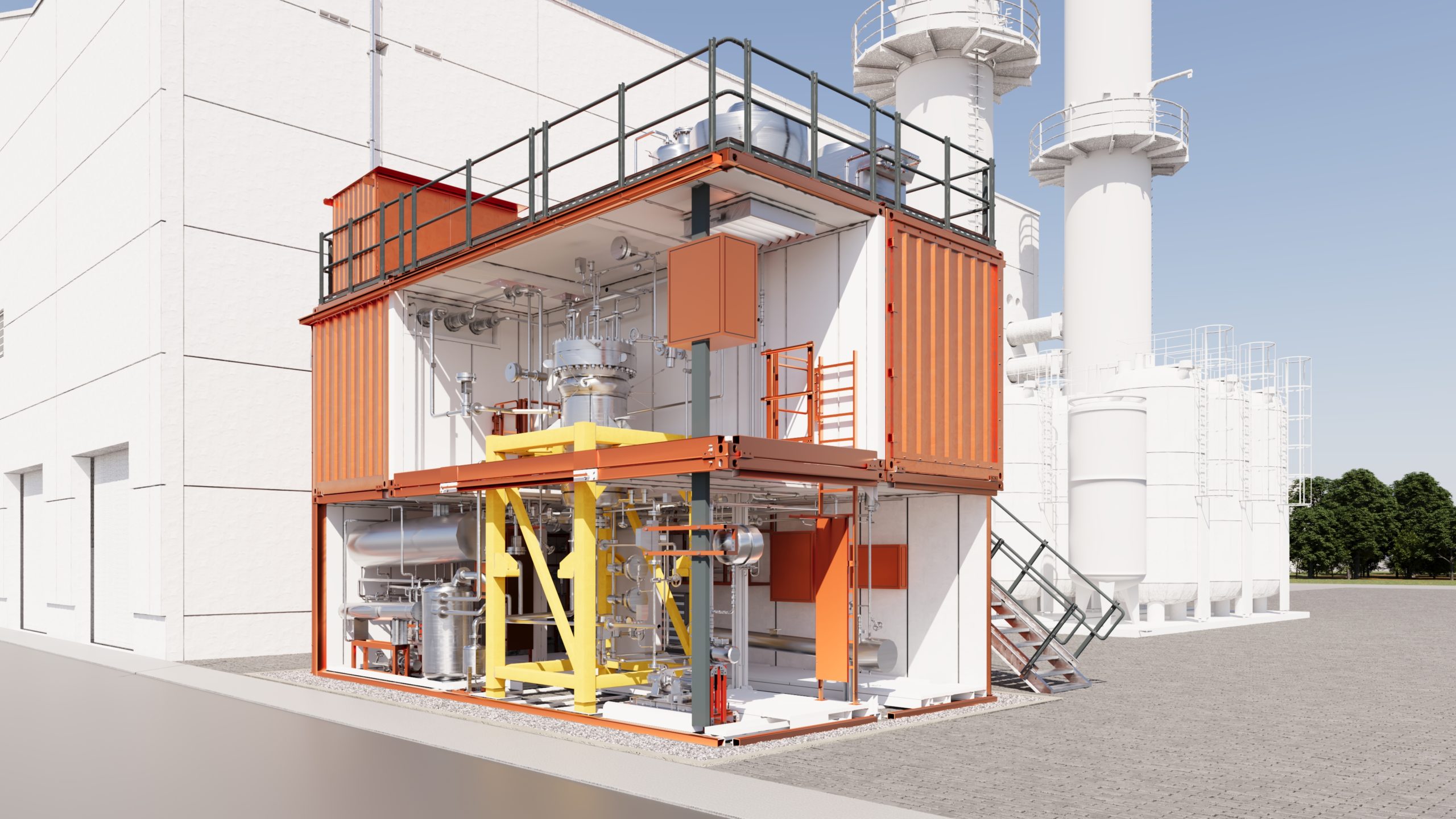
Graphic: Forschungszentrum Jülich
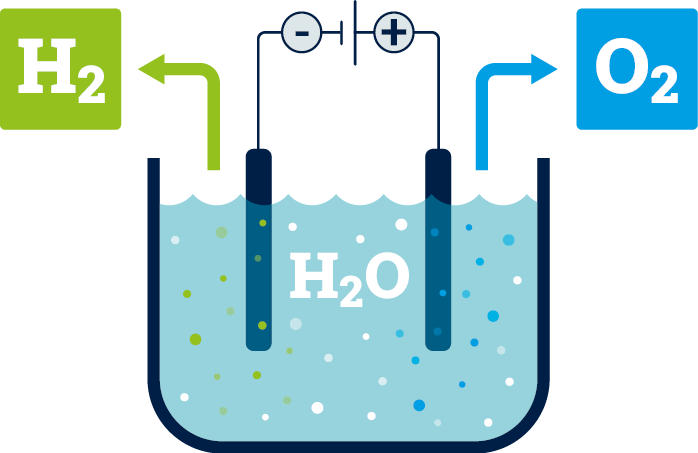
“The Rhenish mining area is ideally suited to demonstrating technological concepts of this kind. There is an abundance of biological residual materials here, as well as wind turbines and photovoltaic systems. Farmers can use green electricity to run electrolysers, load the hydrogen onto the biogenic carrier and then power their tractors and machinery with it,” says Peter Wasserscheid.
His vision for the future is that large agricultural machinery cooperatives could create a new form of energy self-sufficiency that is largely independent of fossil fuels, including the emission-free operation of heavy vehicles.
At the same time, established hydrogen storage methods will remain relevant, Peter Wasserscheid stresses: “There is no single energy technology that meets every requirement. Every storage method has its strengths and its own specific fields of application.”
The copyright for the images used on this website is held by Forschungszentrum Jülich, aligator kommunikation GmbH and stock.adobe.com.