The needle in the data haystack: how AI could speed up research
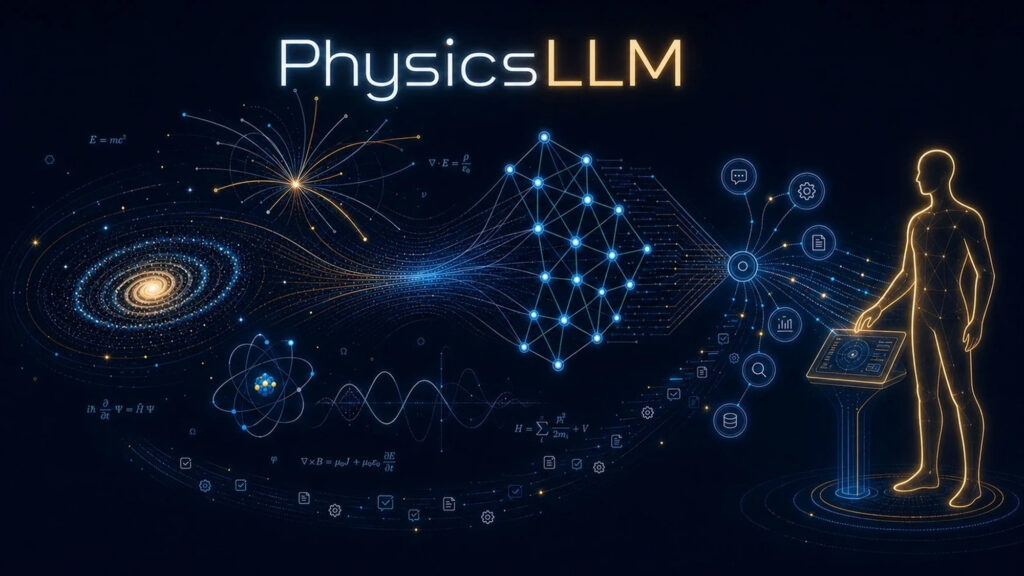
The Physics-LLM AI system aims to help researchers handle large volumes of data. Image: A. Khalatyan (AIP), AI-generated using Kimi K3.
Large-scale research facilities generate enormous volumes of data. And those volumes keep growing. Prof. Hans-Georg Steinrück, a physicist at Forschungszentrum Jülich, describes this as a “historic transformation”. To make more effective use of these vast quantities of data, eight research institutions are working together to use artificial intelligence to find relevant results in datasets more quickly. Their joint project is called Physics-LLM. Among those involved are Hans-Georg Steinrück and his team at Jülich’s Institute for a sustainable Hydrogen Economy (IHE).
At IHE, for example, researchers generate large volumes of data by investigating the chemical reactions involved in hydrogen storage down to the atomic level. During experiments at synchrotrons or free-electron lasers, they record up to several thousand images per second. Yet even long-term studies in IHE’s laboratories, capturing just one image per second over weeks or months, can produce enormous datasets. These data provide valuable insights into chemical reactions and reaction pathways, as well as catalyst ageing, loss of performance and regeneration. The crucial information is often hidden like the proverbial needle in a haystack. Physics-LLM aims to help researchers pinpoint this information, analyse large datasets efficiently and identify connections. It will also support them in preparing experiments and writing the code needed to run them.
For Hans-Georg Steinrück, these opportunities also raise a central question: how can researchers retain control over AI-assisted research? They should not simply let AI take charge. Their own experimentation will remain essential.
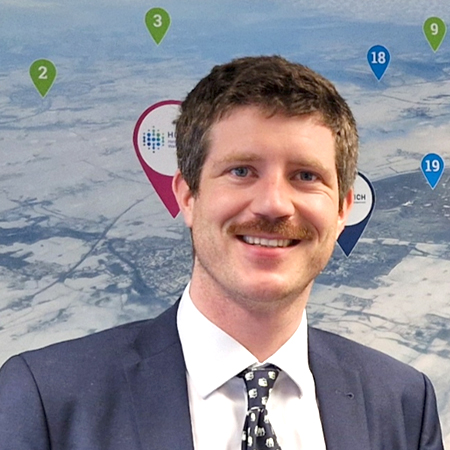
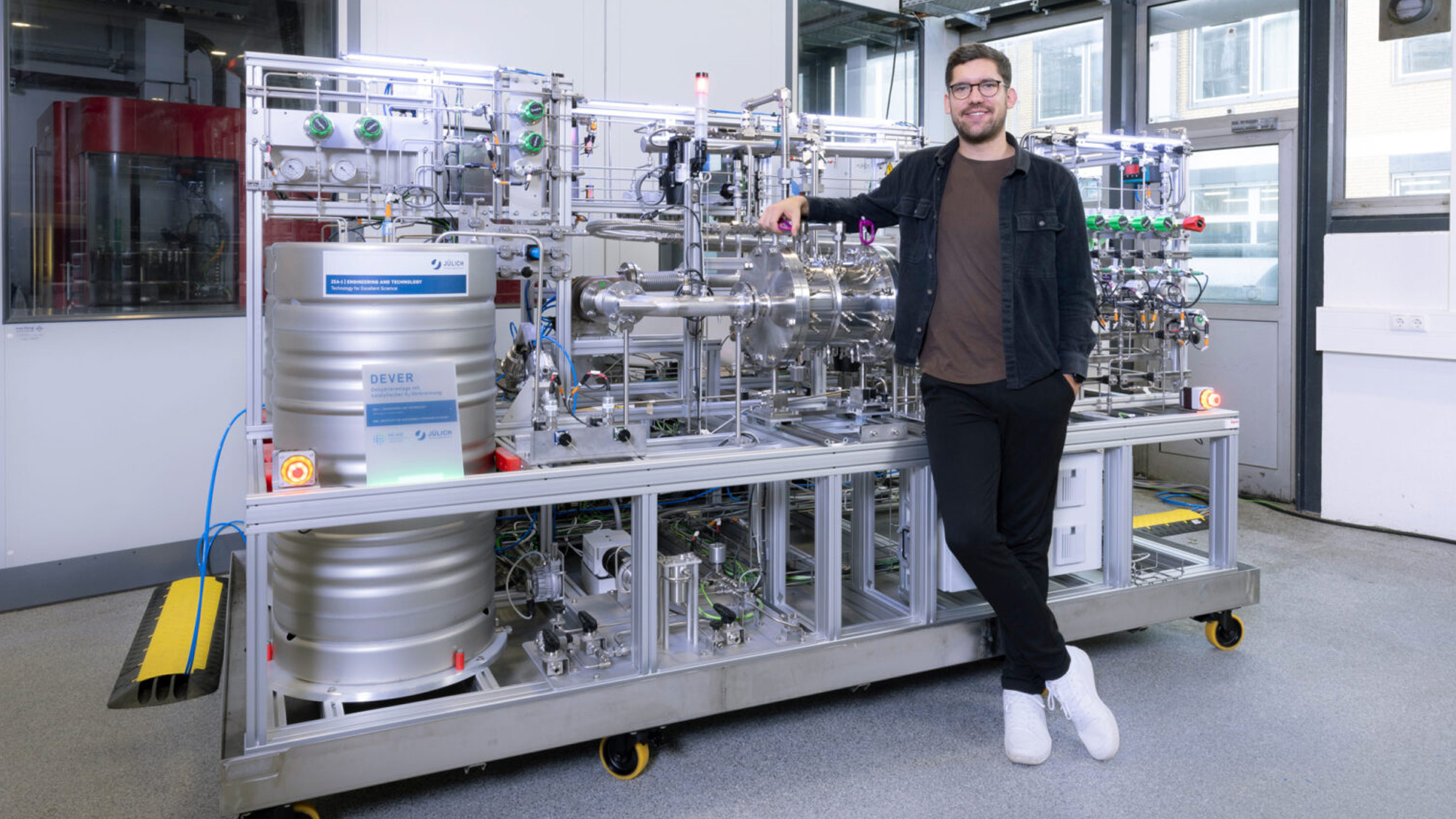
Professor Hans-Georg Steinrück is one of the researchers working on Physics-LLM. Foto: Forschungszentrum Jülich/Steinrück
The Federal Ministry of Research, Technology and Space is providing around €2.9 million in funding until October 2028 for Physics-LLM: Applying Large Language Models to Research Data Management in Physics.
The copyright for the images used on this website is held by Forschungszentrum Jülich, aligator kommunikation GmbH and stock.adobe.com.
Current
Sweet-LOHC: the next generation of chemical hydrogen storage
April 15, 2026
Liquid organic hydrogen carriers are set to become even more sustainable. In a new research focus at the Institute for a sustainable Hydrogen Economy (IHE),
New catalyst approach combines advantages from two worlds
July 30, 2025
A team from Forschungszentrum Jülich and RWTH Aachen University has developed a novel approach for a catalyst that combines the advantages of the two most
Converting ammonia production to a low-emission process is one of the major challenges in the fight against climate change. Ammonia, one of the world’s most
Electrolysers and fuel cells are like the yin and yang of the hydrogen world. They represent two processes that are opposite yet perfectly complementary. An
Last week, the LOHC One Reactor, an important component for researching innovative technologies for the energy supply of the future, was delivered to the Jülich
A tailor-made catalyst could help to boost the potential of hydrogen for tomorrow’s green energy supply. Researchers at RWTH Aachen, the Max Planck Institute for
This is how the Rhenish mining area produces hydrogen
November 4, 2024
Who has the largest electrolyser? The race is obviously on. And that’s a good thing. Because it indicates that the forecasts of Prof. Peter Wasserscheid