The energy transition will not be decided in individual regions, but at European level. At the same time, it is crucial that regions contribute their respective strengths to a shared, resilient European energy system. Hydrogen plays a key role in this – both regionally and across Europe.
This message was the central theme of the themed evening “Hydrogen for Structural Change in North Rhine-Westphalia – Technologies, Applications and Value Creation” held at the S-Forum of Sparkasse Neuss. The event was organised by the NanoMikroWerkstoffePhotonik.NRW (NMWP.NRW) cluster and the Wasserstoff Hub Rhein-Kreis Neuss/Rheinland e. V.
NRW Minister for Economic Affairs Mona Neubaur used a Rhineland saying to illustrate that regional activities and Europe-wide action are not a contradiction, but go hand in hand: “Wir halten Pohl.” Outside the Rhineland, this can be translated as ‘sticking to the plan’, ‘not giving up’ or ‘staying on course’. That is precisely what it is all about: staying on course and further expanding hydrogen as a key energy technology in NRW.
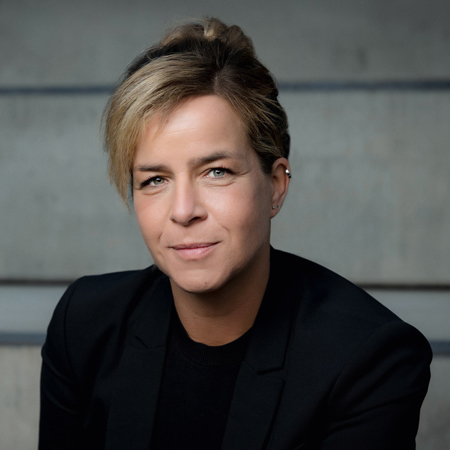
NRW Minister for Economic Affairs Mona Neubaur, © MWIKE NRW/Nils Leon Brauer
“NRW is a hub for hydrogen,” said Mona Neubaur. Hydrogen is the molecule of the future par excellence. This becomes particularly clear in times of “further fossil fuel wars”. She was referring to Russia’s war of aggression against Ukraine, which has led to rising gas prices, as well as to the war in the Middle East, which has caused oil prices to rise. Dependence on a small number of producing regions must be reduced.
“The European single market offers a great opportunity in this regard.” This is particularly true for industrial regions such as North Rhine-Westphalia. In future, they will need to import around 90 per cent of their hydrogen requirements. This demand will arise because hydrogen makes it possible to import energy and store it strategically over the long term.
Hydrogen is like strawberry jam
Prof. Peter Wasserscheid, spokesperson for the Helmholtz Cluster for a Sustainable Hydrogen Economy and Director of the Institute for a Sustainable Hydrogen Economy at Forschungszentrum Jülich, illustrated this with a comparison: green electricity is like fresh strawberries. They are a delight when harvested and eaten straight away. Hydrogen, on the other hand, is like strawberry jam – more labour-intensive to produce, but available for a long time.
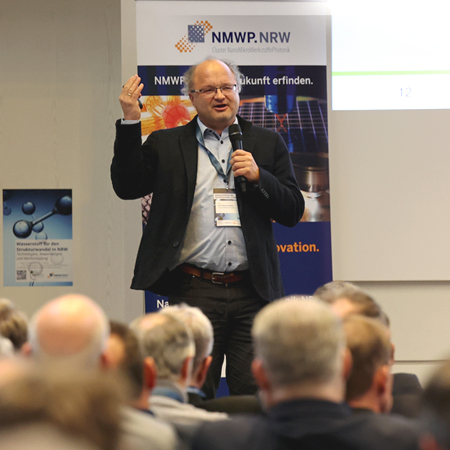
Prof. Peter Wasserscheid
He highlighted another key advantage of renewable energy over fossil fuels such as coal, natural gas and oil: “There are more suitable locations for generating renewable energy than there are for extracting gas and oil.” Hydrogen can harness this strength. It acts as a carrier, transporting green energy from where it is produced to where it is needed.
However, there is one home-grown problem that needs to be resolved: the current regulatory framework. It currently makes it difficult to use surplus electricity for hydrogen production. Peter Wasserscheid illustrated this with a comparison: if green electricity were regulated in the same way as green hydrogen, the owner of an electric car would have to prove that a wind turbine had been built specifically for their car – and that it was turning at precisely the moment the car was being charged.
These regulations prevent Germany from producing green hydrogen when the electricity grid is already operating at full capacity. Instead, wind turbines are shut down. “That leaves us with an energy storage system with zero efficiency.”
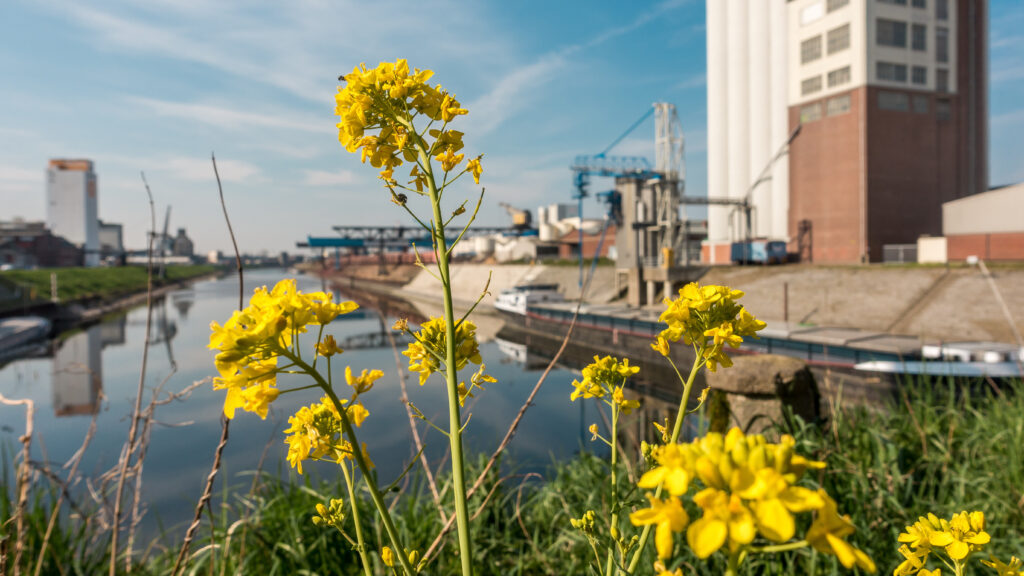
Peter Wasserscheid spoke positively about the location and infrastructure of the Neuss Rhine District for hydrogen imports. The Rhine offers the possibility of connecting Neuss by waterway to the major North Sea ports of Rotterdam, Amsterdam and Antwerp. ‘In future, the Port of Neuss will offer the possibility of unloading hydrogen and its derivatives here and supplying many customers in the region from this location.’ With the Rhine as a key waterway and its proximity to the future core hydrogen network, Neuss could become a major hub for hydrogen supply in the region.
German thoroughness and Dutch innovative spirit
Hannah Tijmes, Consul General of the Kingdom of the Netherlands, also highlighted the link between energy policy and geopolitical developments: “Europe is being set back once again. First, there was Russia’s attack on Ukraine, which led to a gas crisis. Now there is the war in the Middle East and rising oil prices. Anyone who fails to recognise now that Europe must become more energy-independent has missed the point entirely.”
She called for closer cooperation between the Netherlands and North Rhine-Westphalia – particularly in establishing a joint hydrogen economy. German thoroughness and Dutch innovative strength could benefit the whole of Europe in this regard. An important step, she said, is the planned connection of the Netherlands to the German core hydrogen network by 2030.
A sustainable approach in the Neuss district
Dr. Dieter Ostermann from the Hydrogen Hub Rhein-Kreis Neuss/Rheinland also emphasised that regional strengths must be considered from a European perspective. “Hydrogen offers a twofold opportunity here: innovations from the region can be brought to the world. At the same time, a resilient, sustainable energy supply is created.”
Dr. Harald Cremer (NMWP.NRW) added: “The hype surrounding hydrogen has died down. Now we are focusing on what actually works.” He said this was not a step backwards, but a necessary step towards greater realism and practical implementation.
Mona Neubaur was the first speaker of the evening. The second layer of meaning she established for “Wir halten Pohl” also has the potential to serve as a closing remark. It also signifies that the course set towards hydrogen in the Rheinkreis Neuss district has been consistently pursued not just since yesterday, but for a long time now. Issues for the future take time – and, above all, perseverance.
The copyright for the images used on this website is held by Forschungszentrum Jülich, aligator kommunikation GmbH and stock.adobe.com.