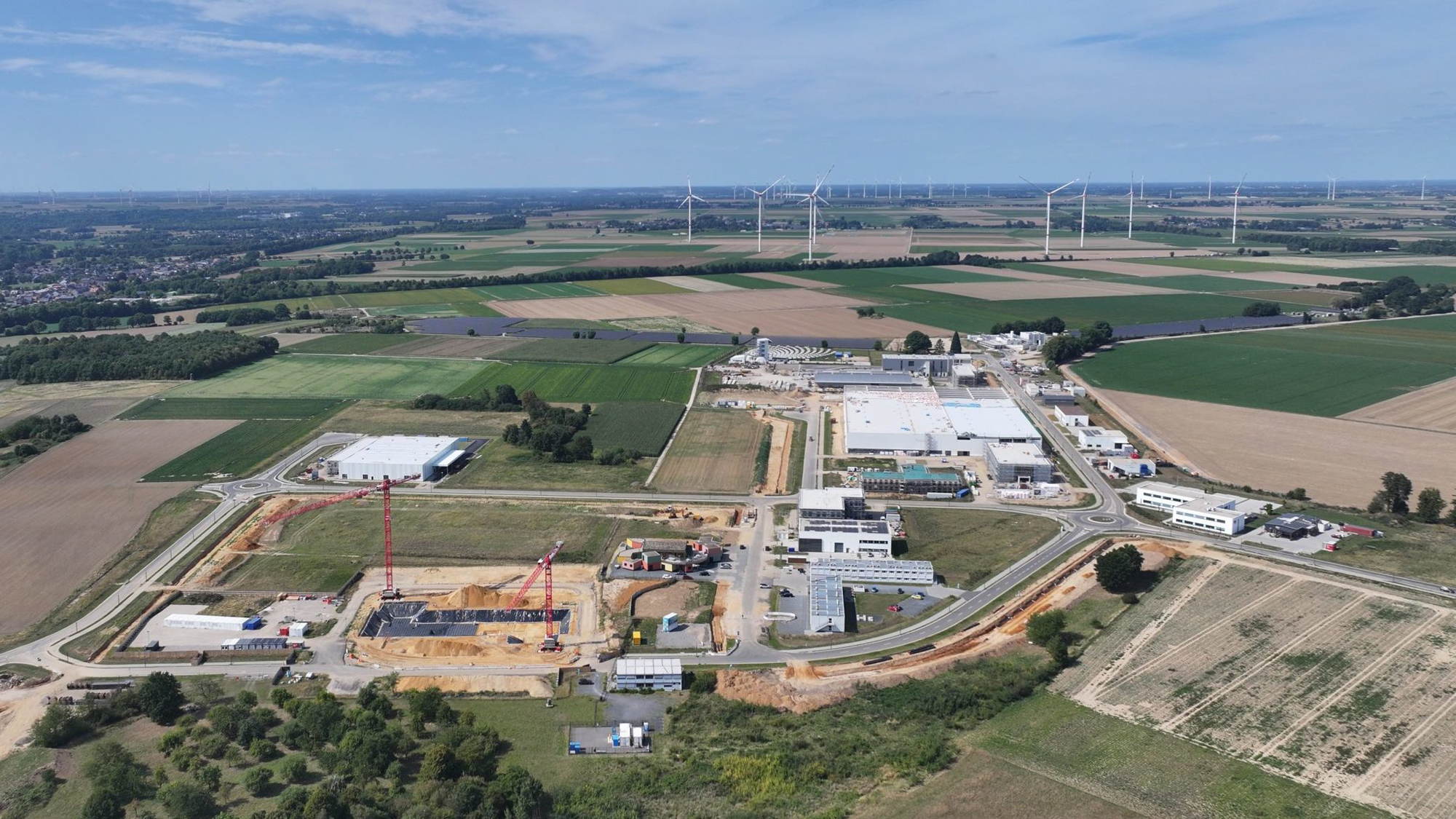
An important milestone in the development of the Institute for Sustainable Hydrogen Economy (IHE) at Forschungszentrum Jülich has been reached; not yet in stone and concrete, but the plans are taking shape. It has now been confirmed that the internationally active architectural firm HENN will design the new IHE facility. The permanent home of Jülich’s newest institute is scheduled for completion at the end of 2031. The IHE has been located at Brainergy Park Jülich from the outset. This is also where the new research building will be constructed, with around 90 million euro in funding from the state of North Rhine-Westphalia for structural reinforcement in the Rhineland mining area.
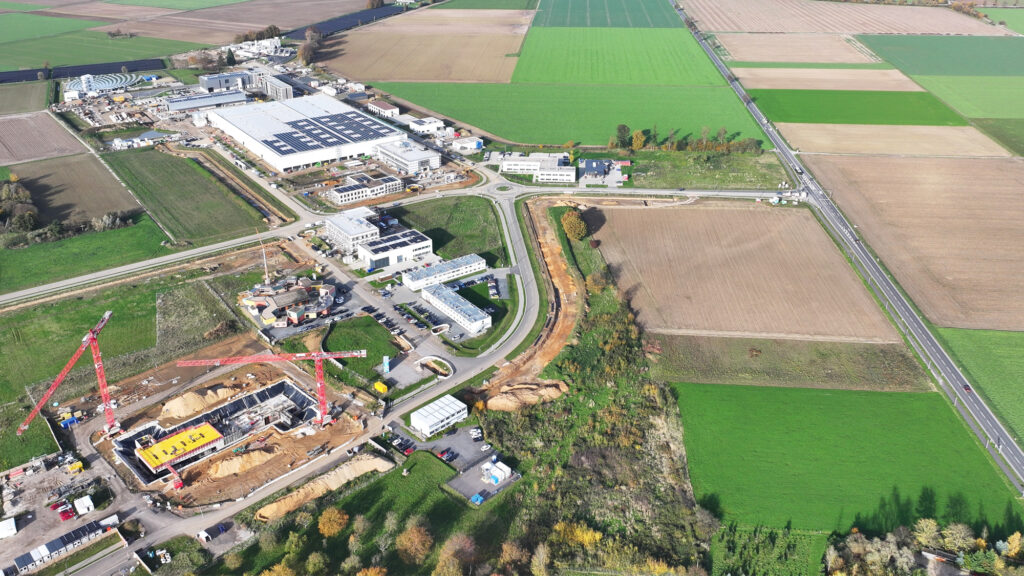
The internationally active firm HENN emerged as the winner of a public tender process. HENN is very familiar with the local conditions. The company also designed the Brainergy Hub, the central building in the park that is currently under construction. The IHE’s future research building will be another defining element of the innovative business park north of Jülich, alongside the Hub. It is located on an 18,930 square metre site directly at the entrance.
“The new research building is a key milestone in the development of our institute. We are delighted to have gained a partner in HENN who understands both the dynamics of our region and structural change. HENN has extensive experience in combining research, development and administration architecturally and functionally – while creating spaces that promote identification and community,” says Dr Susanne Spörler, Head of Infrastructure and Scientific Coordination at IHE.
HENN is an internationally renowned architectural firm with over 75 years of experience in developing innovative working environments for offices, science, health, industry, education and culture. An interdisciplinary team of 400 experts works closely together at locations in Munich, Berlin, Frankfurt am Main and Shanghai. The collaborative design process is driven equally by knowledge and curiosity. HENN draws on a wealth of experience spanning three generations and a global network of partners.
For many decades, HENN has been planning future-oriented working environments based on the idea of innovation through communication – including a large number of buildings for science and research. New ideas arise when people communicate with each other, when their different perspectives meet and they continuously learn from each other. Laboratories become inspiring working and learning environments that promote interaction between researchers.
The goal of all those involved is to create a new research building that offers employees office and laboratory workspaces in one location. The new research building should also reflect the philosophy of the IHE. This states that the institute’s departments build on each other with their research focuses, thereby strengthening the effectiveness of their results. “That’s why the architecture should provide places for researchers to exchange ideas. At the same time, it is an invitation to politicians and society to engage in dialogue with researchers,” explains Birgit Spengler, the architect responsible for the new research building for the INW on behalf of the Planning and Construction Division of Forschungszentrum Jülich. Two other important requirements that are being taken into account in the planning process: The building must meet the requirements for environmentally friendly, climate-friendly, and sustainable construction, and it must offer the institute the opportunity for flexible further development.
Relocation within Brainergy Park
After almost four years, the IHE employees have relocated within Brainergy Park. The institute is now located in a wing of the Hans Lamers Bau GmbH building. The new address is An der Deutschen Welle 7a. The number of employees recently exceeded 150. The IHE’s research focus is on chemical hydrogen storage. The institute also forms the core of the Helmholtz Cluster for Sustainable and Infrastructure-Compatible Hydrogen Economy (HC-H2).
The copyright for the images used on this website is held by Forschungszentrum Jülich, aligator kommunikation GmbH and stock.adobe.com.