In the future energy system, the availability of green electricity will fluctuate significantly – at times plentiful, at other times scarce. To balance supply and demand, hydrogen power plants could store energy in the form of gas and feed it back into the grid when needed. Impossible? Not at all. Researchers in Jülich have developed and tested such a demonstration plant, commonly referred to as a reversible solid oxide cell. They are now working on the next generation, designed to pave the way towards industrial-scale mass production.
Fuel cells power hydrogen buses, for example, or provide data centres with electricity independently of the public grid. They have already proven their practical suitability as clean and quiet energy converters, even though they are not yet widely deployed. The solid oxide variant of these fuel cells (Solid Oxide Fuel Cell, SOFC), operated in Jülich at temperatures between 700 and 750 degrees Celsius, is considered particularly suitable for combined heat and power plants. These generate electricity for residential districts, while the heat produced in the process is also utilised. This increases the efficiency of energy conversion.
Like all fuel cells, SOFCs combine hydrogen with oxygen from the air to form nothing but water – a process that works in reverse in electrolysis plants: there, water is split into hydrogen and oxygen using electricity, in order to store energy in the form of hydrogen and convert it back into electricity when required.
One Plant Instead of Two
Do we really need two plants for a single reversible process? For decades, science has known that an SOFC can also be operated in electrolysis mode. But only with the gradual phasing out of fossil fuels has this option come back into focus.
“You only need one plant instead of two: you pay for the electrolyser and get the fuel cell for free”
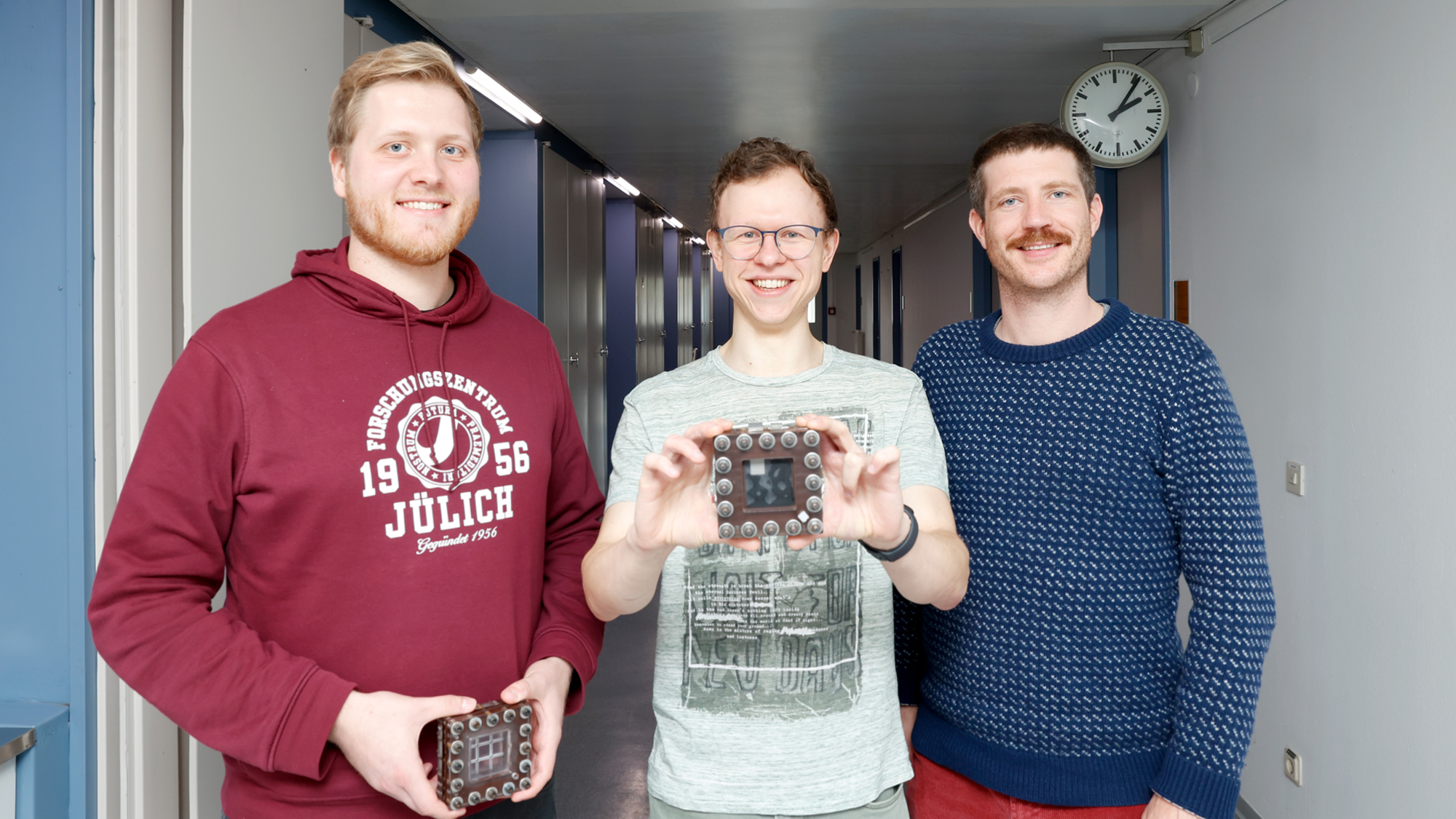
Dr. Remzi Can Samsun, Head of Department at the Institute of Energy Technologies (IET-1), Forschungszentrum Jülich
The major advantage of a reversible solid oxide cell lies in its potential cost savings: “You only need one plant instead of two: you pay for the electrolyser and get the fuel cell for free,” explains Dr Remzi Can Samsun from the Institute of Energy and Climate Research (IET-1) at Forschungszentrum Jülich. But it is not only the investment that becomes cheaper, emphasises Roland Peters from the Jülich Institute for a sustainable Hydrogen Economy (IHE): “The plant does not sit idle when energy conversion in one direction is not needed – it simply works in the other direction.” As a result, operating costs also decrease. Since the usefulness of the technology depends on hydrogen storage options, close cooperation between IET and INW is essential.
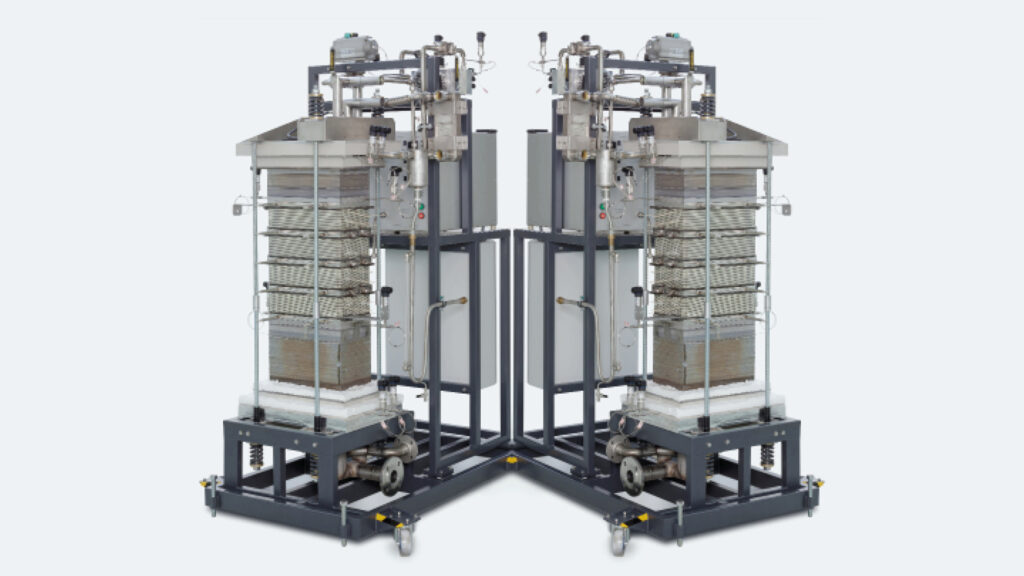
As early as 2018, researchers at Forschungszentrum Jülich led by Roland Peters developed a reversible solid oxide system that could generate 5 kilowatts of direct current in fuel cell mode and absorb 15 kilowatts of direct current in electrolysis mode. They analysed the physical and chemical processes during operation and examined material and component changes afterwards. The insights gained were used to develop an optimised system with higher performance. The current system produces enough electricity in fuel cell mode (13 kilowatts) to run ten washing machines simultaneously. In electrolysis mode, it can absorb up to 50 kilowatts of alternating current to produce 11.7 cubic metres of hydrogen per hour. This amount corresponds to the average energy demand of 60 households and can be stored as an energy reserve for longer periods. The system contains four stacks, each consisting of 80 solid oxide cells, combined with heat exchangers and electrically heated plates.
The Potential of Integration
“The energy conversion efficiency is very high in both operating modes – and all within a single reversible setup,” emphasises Remzi Can Samsun. “Around 71% efficiency in hydrogen production and about 63% in electricity generation are values comparable to, or even exceeding, those of modern low-temperature electrolysers and low-temperature fuel cells.” Roland Peters adds: “If the system is integrated into industrial processes where waste heat is produced, for instance in the form of steam, significantly higher efficiencies are possible – another unique advantage of the reversible technology.”
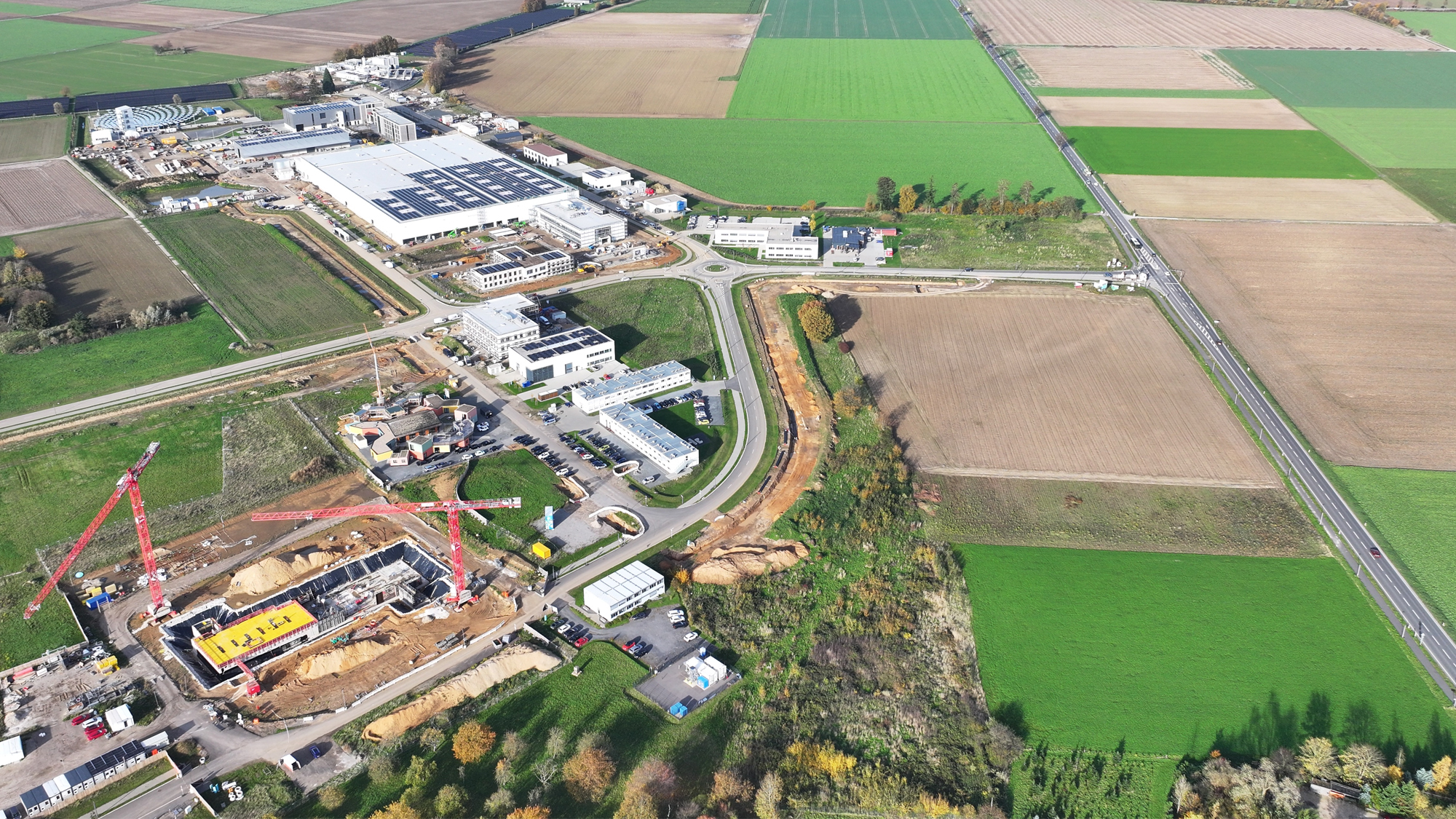
The solid oxide system did not lose any of its performance during test operation, during which it was switched back and forth between both modes 500 times. It forms part of the research activities in the Living Lab Energy Campus, the real-world laboratory for future energy systems at Forschungszentrum Jülich.
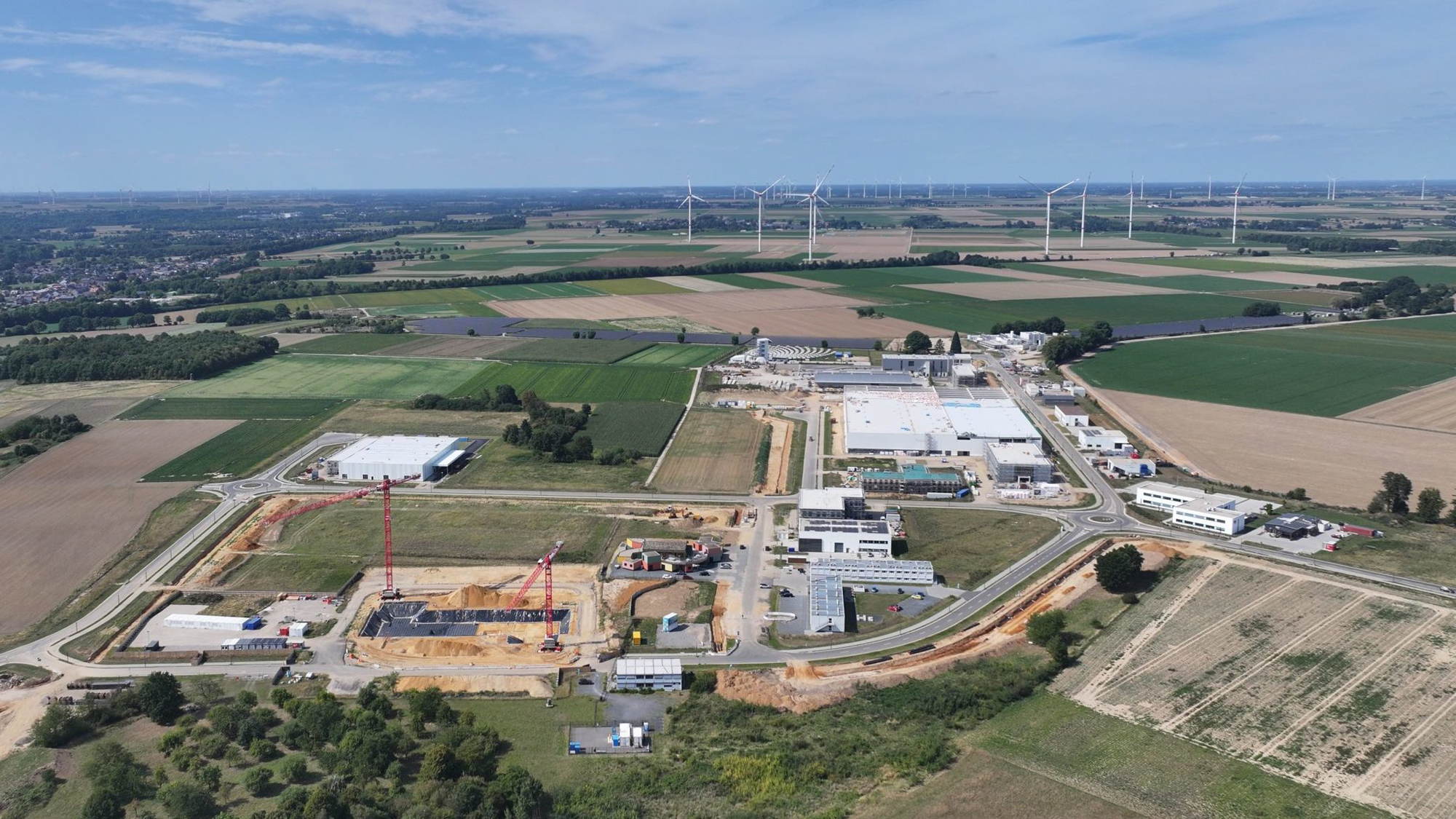
“The system was never intended for industrial production but was designed to prove that the technology works and delivers performance levels relevant for various applications,” says Remzi Can Samsun. He coordinates the PHOENIX project, funded by the Federal Ministry of Research, in which several institutes at Forschungszentrum Jülich are working on the next step in solid oxide cell technology. The researchers are developing a new stack design so that this core component can be manufactured with less material and more cost-effective processes. “Our goal is to transfer reversible solid oxide cell technology into industry,” explains Remzi Can Samsun. That is also why the system is being integrated into a container: this will allow it to serve as a mobile demonstrator that companies in the Rhenish mining region will be able to test on site for their own purposes in a few years’ time.
Editor: Dr. Frank Frick
The copyright for the images used on this website is held by Forschungszentrum Jülich, aligator kommunikation GmbH and stock.adobe.com.