
“If you have visions, you should go to the doctor” – this phrase, famously uttered by former Chancellor Helmut Schmidt during the 1980 federal election campaign, was meant to convey a simple message: only solutions that work immediately count. But today, in the face of the energy transition, we need not only short-term answers. We need visions for the tasks that will arise in a world in flux. A team at Forschungszentrum Jülich has such a vision. It concerns a previously underestimated, hydrogen-based circular system capable of storing vast amounts of energy. The name of this vision is dimethyl ether (DME).
The example of the battery shows how far visions can take us. In the early 1990s, lithium-ion batteries appeared on the market for the first time – at exorbitant prices between 3,000 and 8,000 US dollars per kilowatt-hour. Anyone who, back then, had predicted that prices would fall
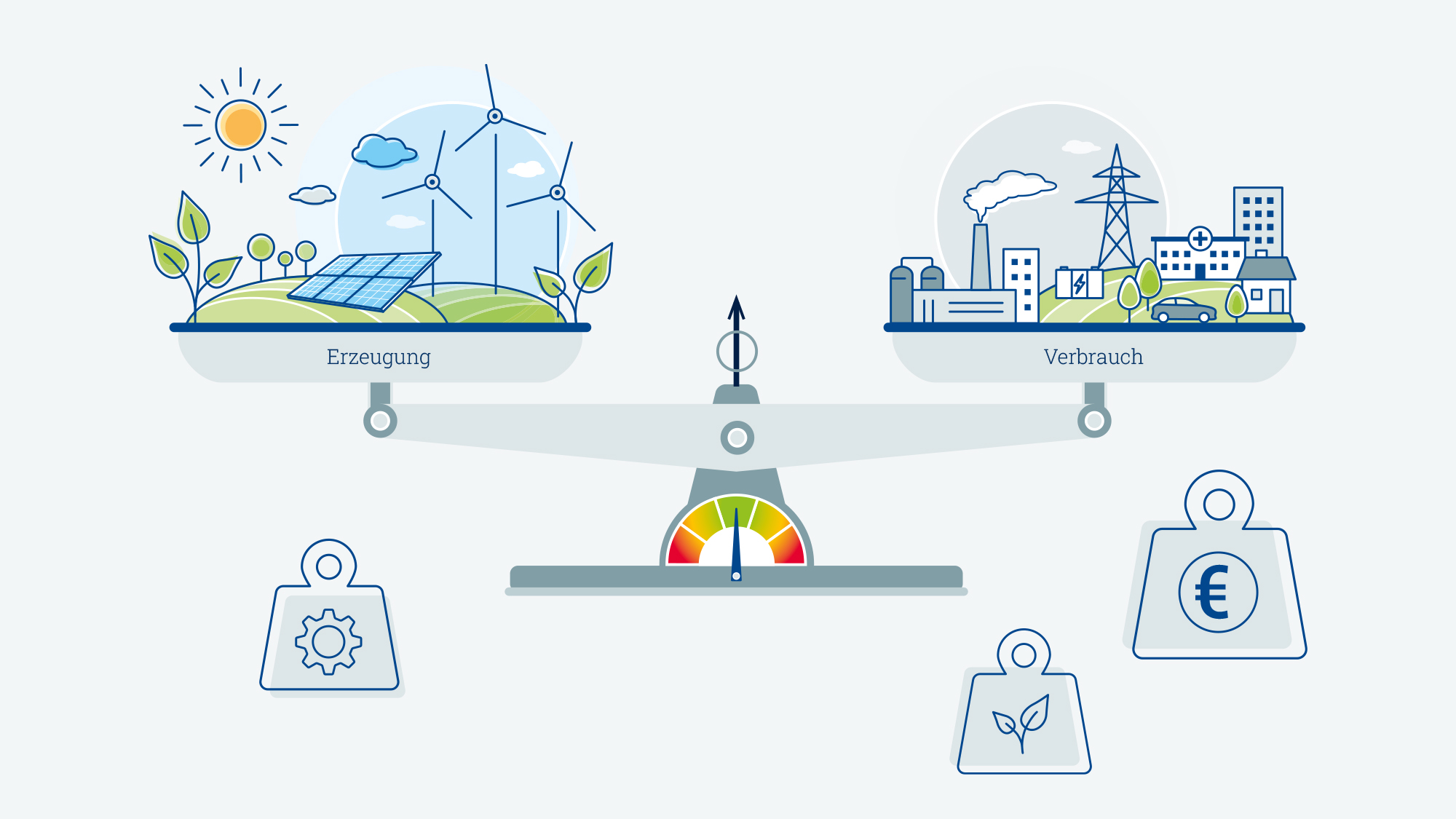
But the story does not end with the battery. A world undergoing transformation requires new, more scalable solutions that work where battery storage systems are too small. Global primary energy demand is rising – by 50 per cent between 2000 and 2025. Added to this is the monumental undertaking of defossilisation: the shift to an energy system that no longer releases greenhouse gases into the atmosphere. Today,
Known from the spray can
At Forschungszentrum Jülich, the Institute for a Sustainable Hydrogen Economy (INW) is working on an idea as ambitious as it is promising: establishing dimethyl ether (DME) as a hydrogen carrier molecule of the future. DME is easy to liquefy, safe to store, non-toxic, and compatible with existing infrastructure – for example storage tanks, pipelines, and ships. It is already used today as a propellant in spray cans (such as deodorants): inside the can it remains liquid, but it evaporates while spraying and disperses the active substance.
In a widely noted study (“Dimethylether/CO₂ – a hitherto underestimated H₂ storage cycle”), a research team led by Prof Peter Wasserscheid examined the role of DME in a potential energy cycle. The special feature: DME can be used efficiently as an energy store and subsequently reconverted into hydrogen. This creates a circular system – powered by green electricity used to produce green hydrogen, and with CO₂ as a continually recycled component that does not enter the atmosphere but moves in a closed loop.
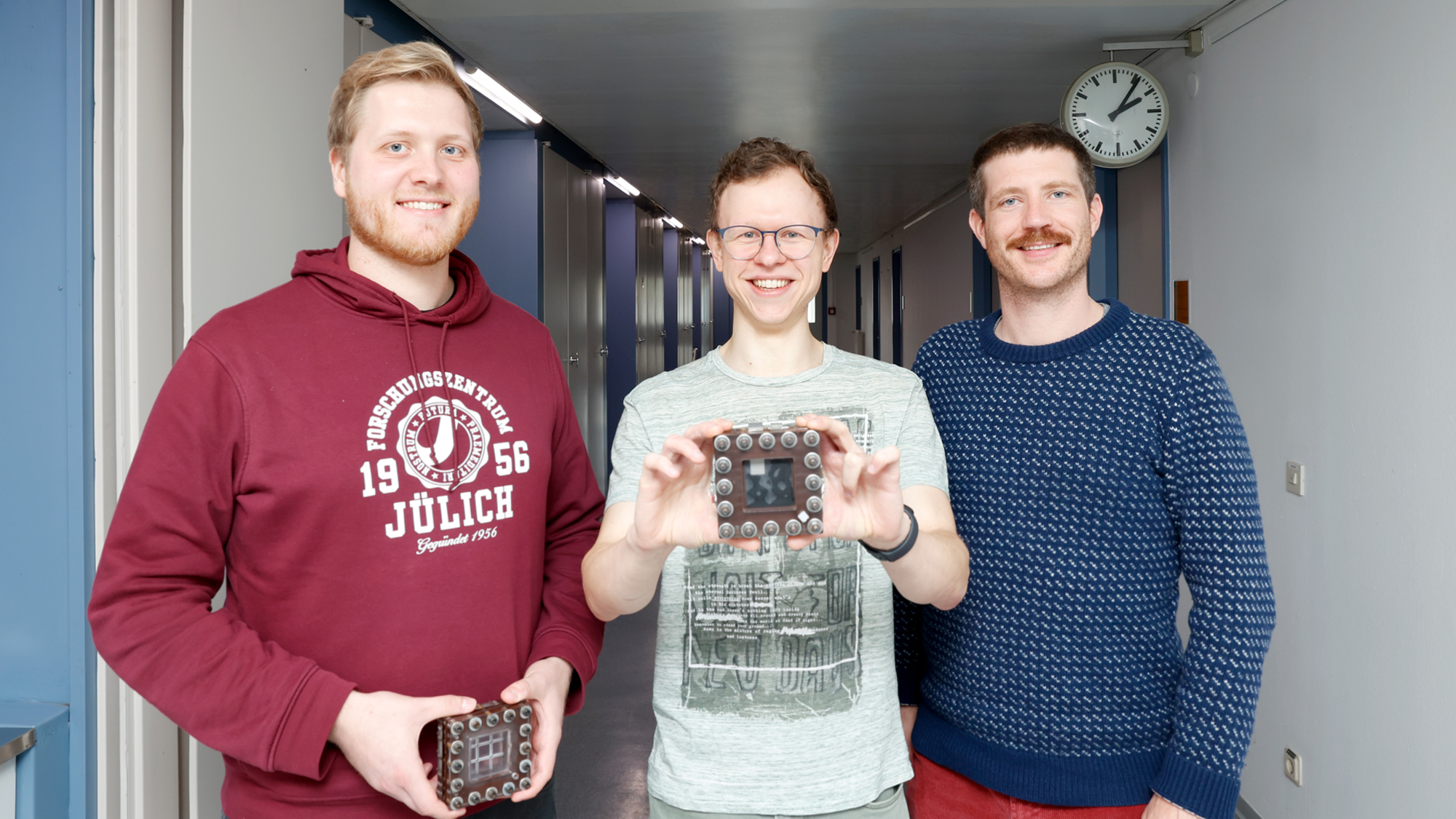
Philipp Morsch, team leader in the Process and Plant Engineering division headed by Prof Andreas Peschel, understands the magnitude of the task: “The road ahead is still long and several questions need to be answered. But we can already see that it can be both possible and meaningful. The key is the easy handling of DME.” Essentially, any infrastructure designed to store or transport CO₂ could also be used for DME. Both substances are liquid at low pressure. CO₂ requires a temperature of –20 degrees Celsius, whereas DME only requires ambient temperature. This opens up enormous potential for logistics, storage, and recirculation. The fact that DME and CO₂ are so compatible is the key to economic viability.

Philipp Morsch, Team leader in the Institute’s Process and Plant Engineering Division, headed by Prof. Andreas Peschel
How the cycle works
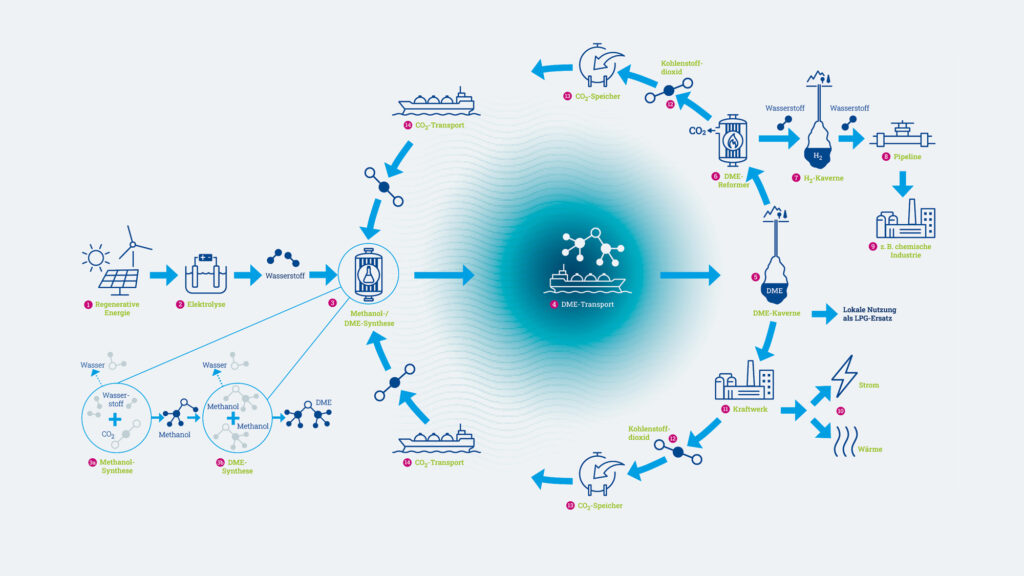
The cycle begins with green electricity, usually generated from wind or solar power. This electricity drives electrolysis: water is split into hydrogen and oxygen. Because the electricity is green, the hydrogen is also climate-neutral. In a first synthesis stage, methanol is produced – an established process that, however, is still primarily based on fossil feedstocks. The aim is to produce green methanol in the future using green hydrogen and captured CO₂.
In the second step, methanol is converted into DME in a well-known reaction. Two methanol molecules combine to form CH₃OCH₃ (the chemical formula for DME), with water being released as a by-product. This reaction is chemically simple, well understood, and has long been established in industrial practice.
The DME produced is then transported by ship. Since it behaves similarly to CO₂, no separate infrastructure is required. Typical destinations are underground salt caverns, which are already used today for natural gas storage. At the same time, the first hydrogen caverns are being created. “A DME cavern can store fourteen times more energy than a hydrogen cavern,” says Philipp Morsch. And, unlike methanol or ammonia, DME is not toxic.
Importing DME by ship may sound cumbersome at first, but it is already an economically proven approach for other hydrogen-based molecules – for example in the ammonia trade. The reason: in regions rich in sun and wind, green hydrogen can be produced much more cheaply than in Germany. The price of green electricity – and therefore green hydrogen – dominates the price of ammonia, methanol, or DME. Gas is also imported in the fossil energy system. “The natural gas stored in our caverns does not originate in Germany either; it arrives via pipeline or ship,” says Philipp Morsch.
DME as a strategic backup
After storage in a cavern, two pathways are conceivable. In the first scenario, the DME is reformed back into hydrogen and CO₂. The hydrogen can then be temporarily stored in a separate hydrogen cavern and transported via pipeline when needed – for example for fuel cells, gas-fired power plants, or chemical industry applications. This combination of DME cavern, reformer, and hydrogen cavern can be particularly efficient. “The DME cavern would serve as a strategic backup for the hydrogen cavern. A DME cavern contains as much hydrogen as fourteen hydrogen caverns,” explains the Jülich researcher.
“Another option is the local use of DME as an LPG (liquefied petroleum gas) substitute in tanks at the end user’s site. The requirements LPG and DME place on storage and use are largely identical. LPG – that is, propane or butane – is typically used in regions where the natural gas network coverage is incomplete. According to the German Liquid Gas Association (DVFG), around 650,000 households in Germany heat with liquefied gas.” The second pathway would be the direct use of DME for electricity and/or heat generation, for example in a gas-fired power plant with integrated CO₂ capture specifically designed for this purpose. “Such a process does not yet exist because the DME cycle itself does not yet exist. But anyone capable of building a gas-fired power plant could also build a DME-fired plant,” says Philipp Morsch.
Both variants offer the advantage that either the reformer or the power plant provides so-called point sources of CO₂ – locations where the CO₂ produced can be captured in concentrated form and returned to the cycle. The result is a closed-loop system: the CO₂ is stored, shipped, and transported back to the synthesis stage. There, the cycle begins again with DME synthesis via the intermediate step of methanol.
It starts with an idea
The vision of a DME cycle is based on established processes, usable infrastructure, and a clear objective: storing large amounts of energy safely, efficiently, and in a climate-neutral manner. “We are not about to implement this cycle on a large scale,” says Philipp Morsch regarding the current state of research and technology. For example, more experience and knowledge are needed in adapting green methanol synthesis to the fluctuating availability of green electricity. And the companies that build and operate caverns are only just beginning to consider hydrogen in their planning. For them, DME is at best a distant prospect. But this does not have to be a disadvantage – as long as those who have concrete visions for the energy system of the future do not go to the doctor, but instead look for ways to turn these visions into reality.
The copyright for the images used on this website is held by Forschungszentrum Jülich, aligator kommunikation GmbH and
stock.adobe.com.