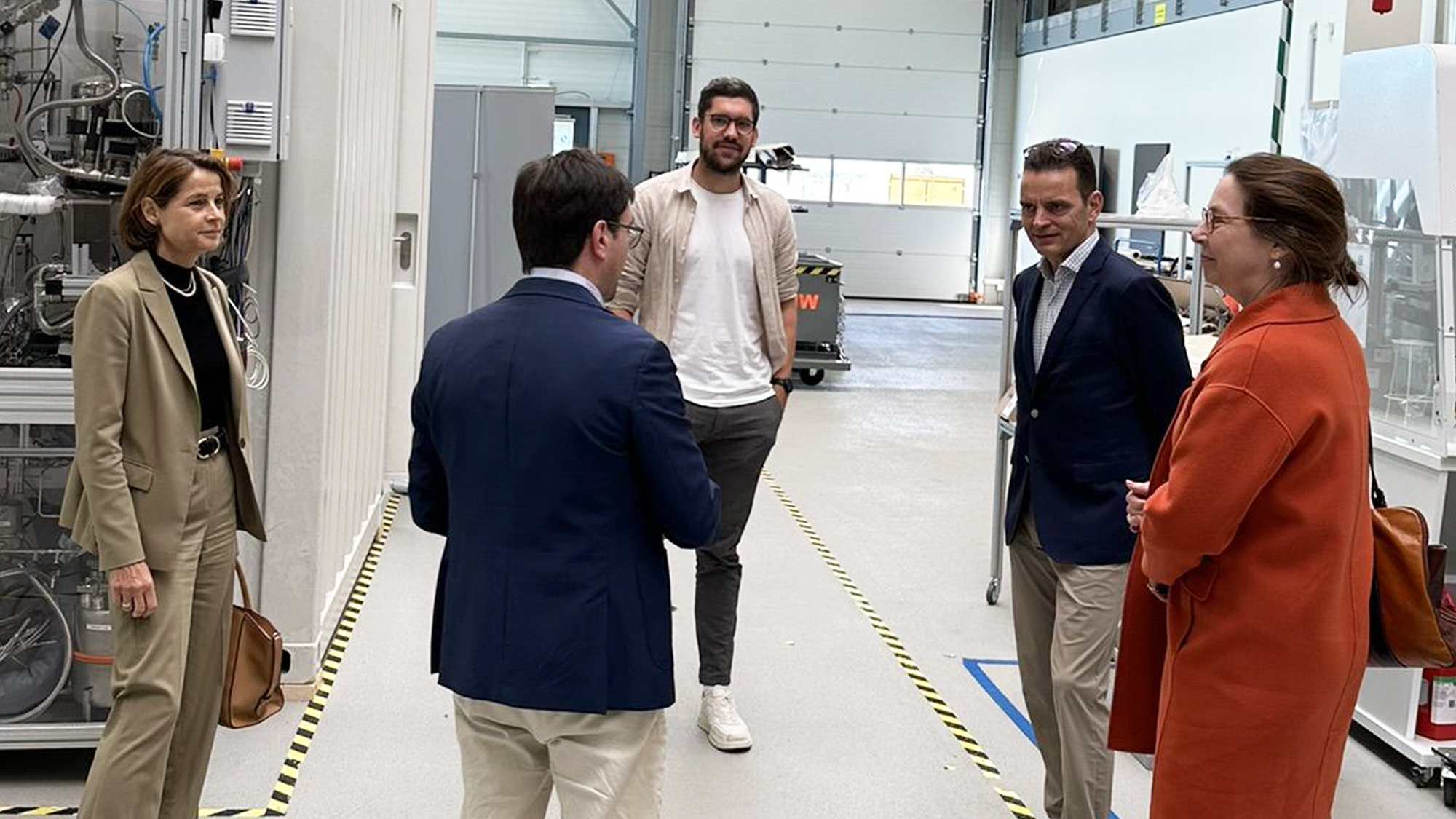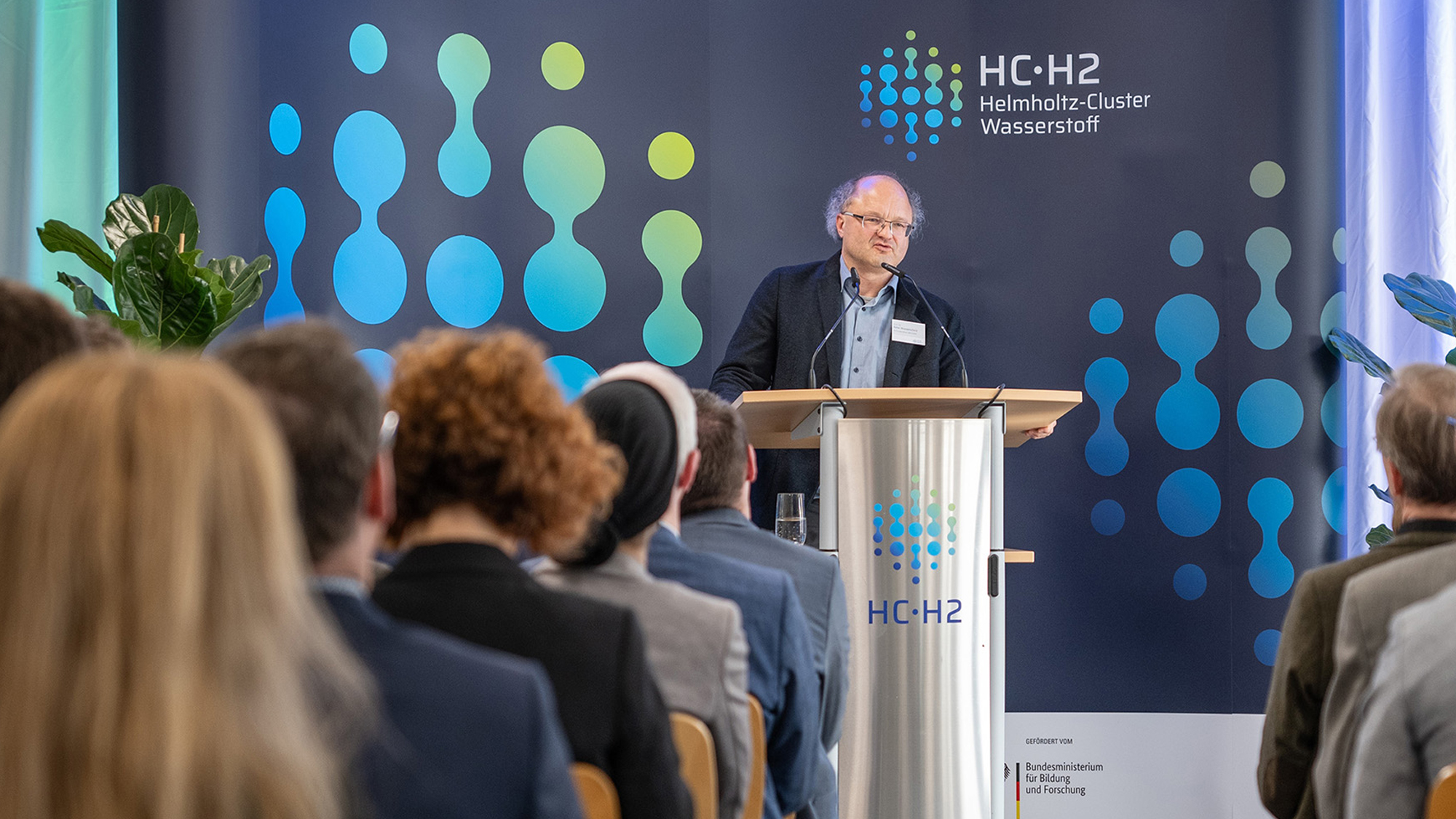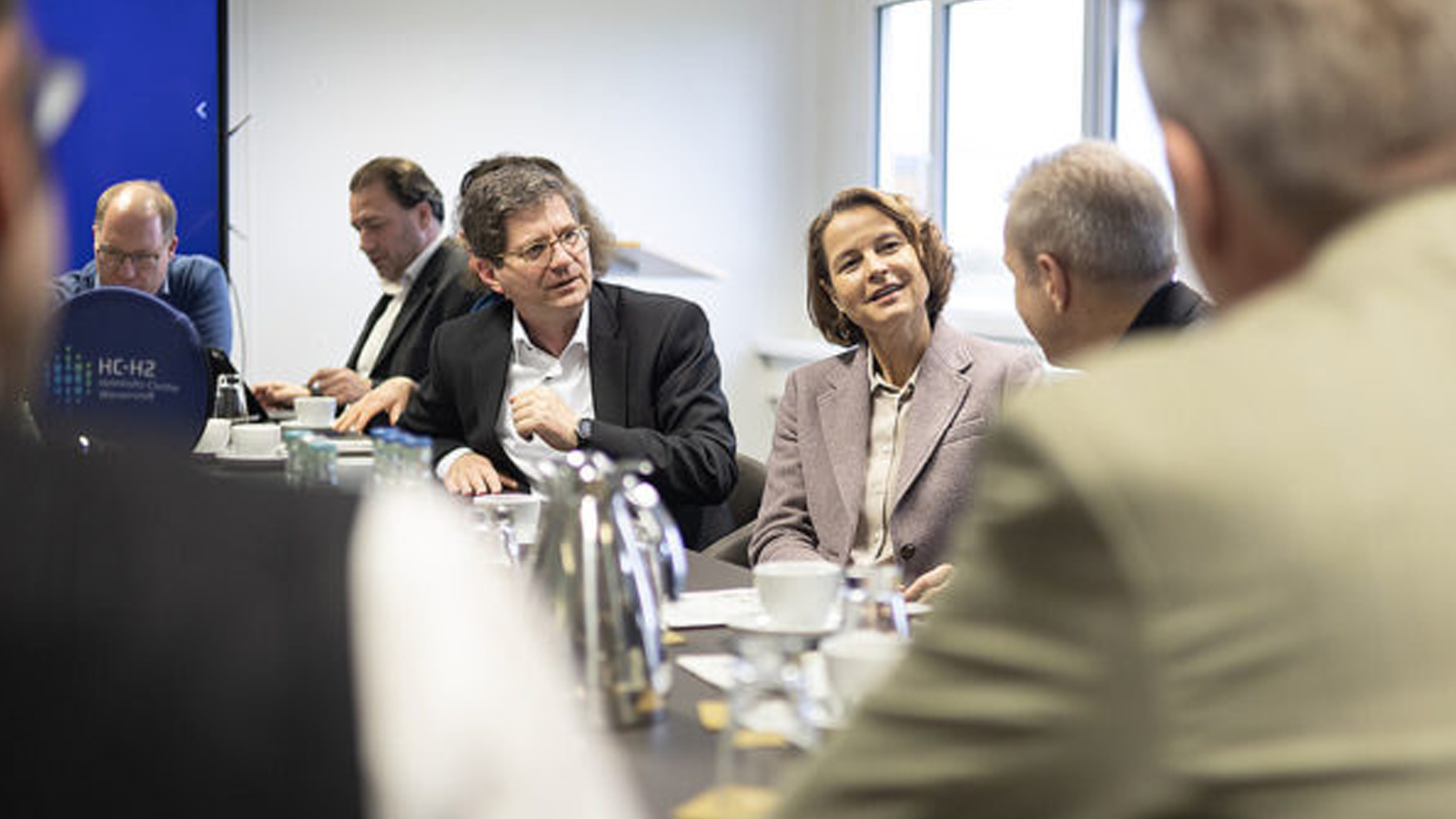
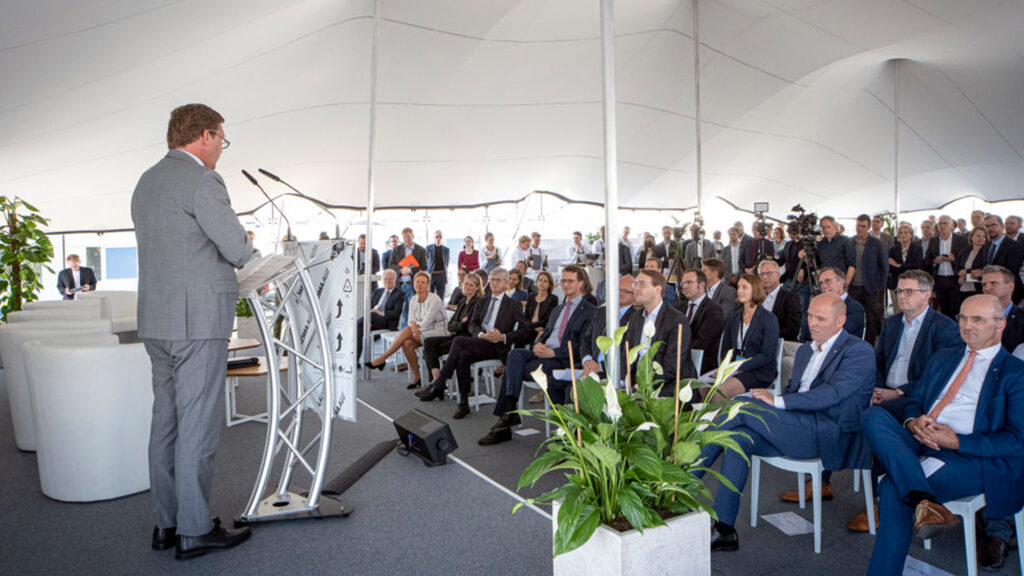
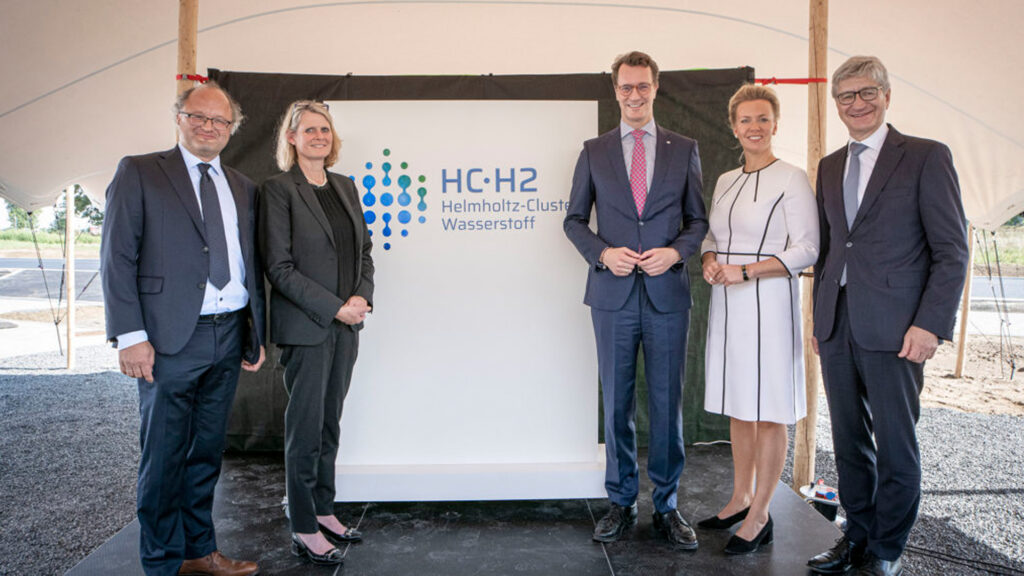
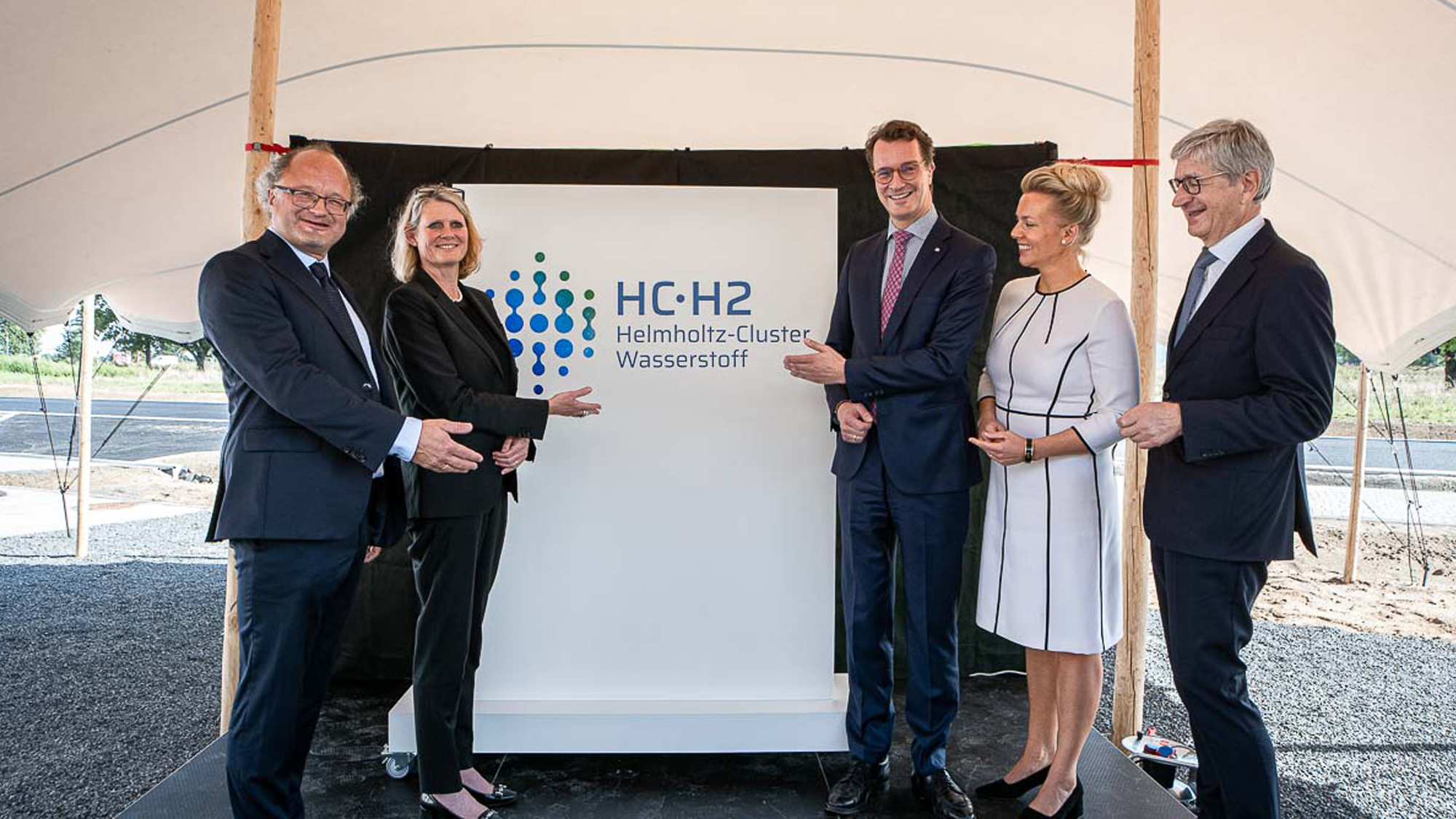
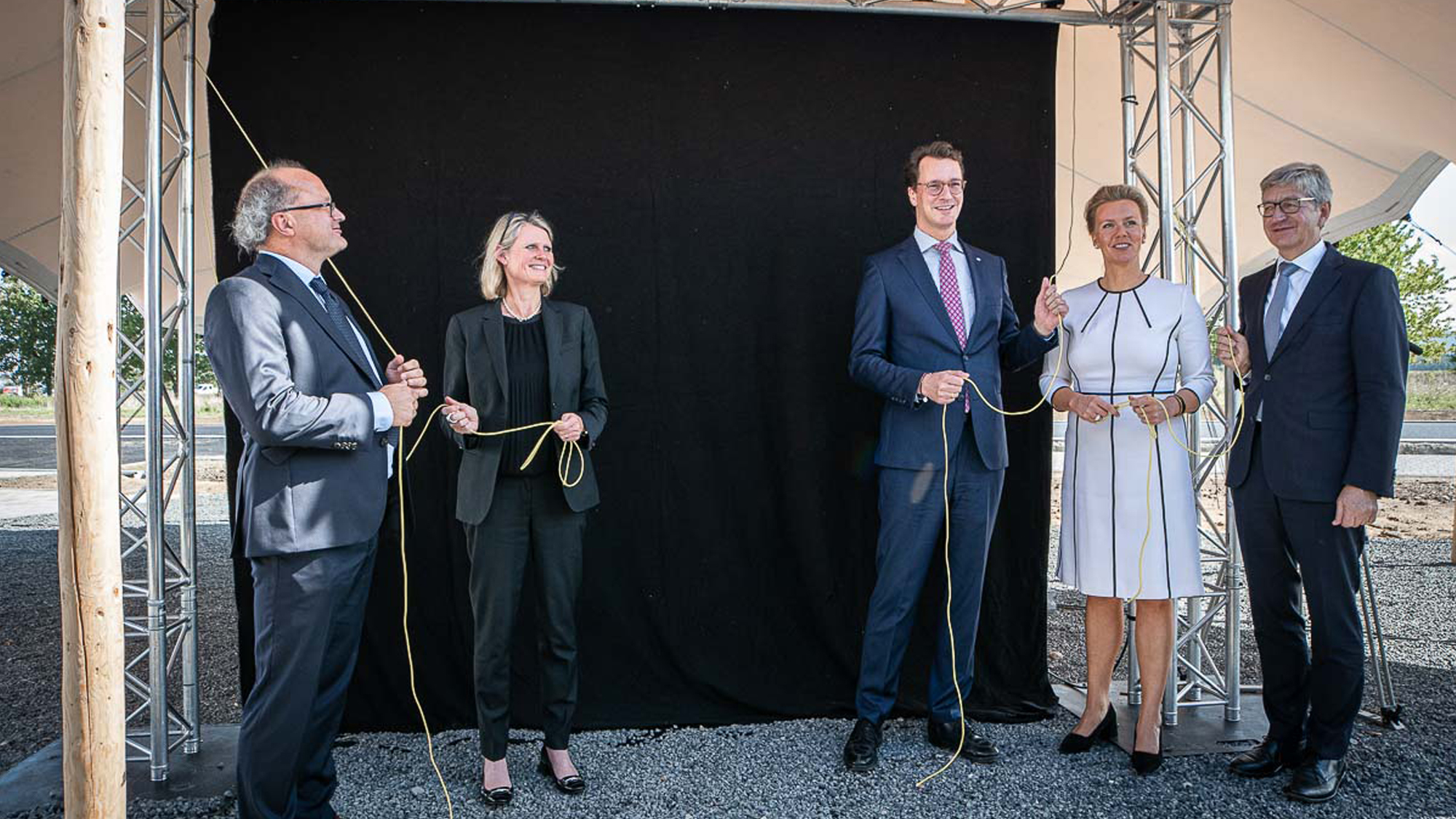
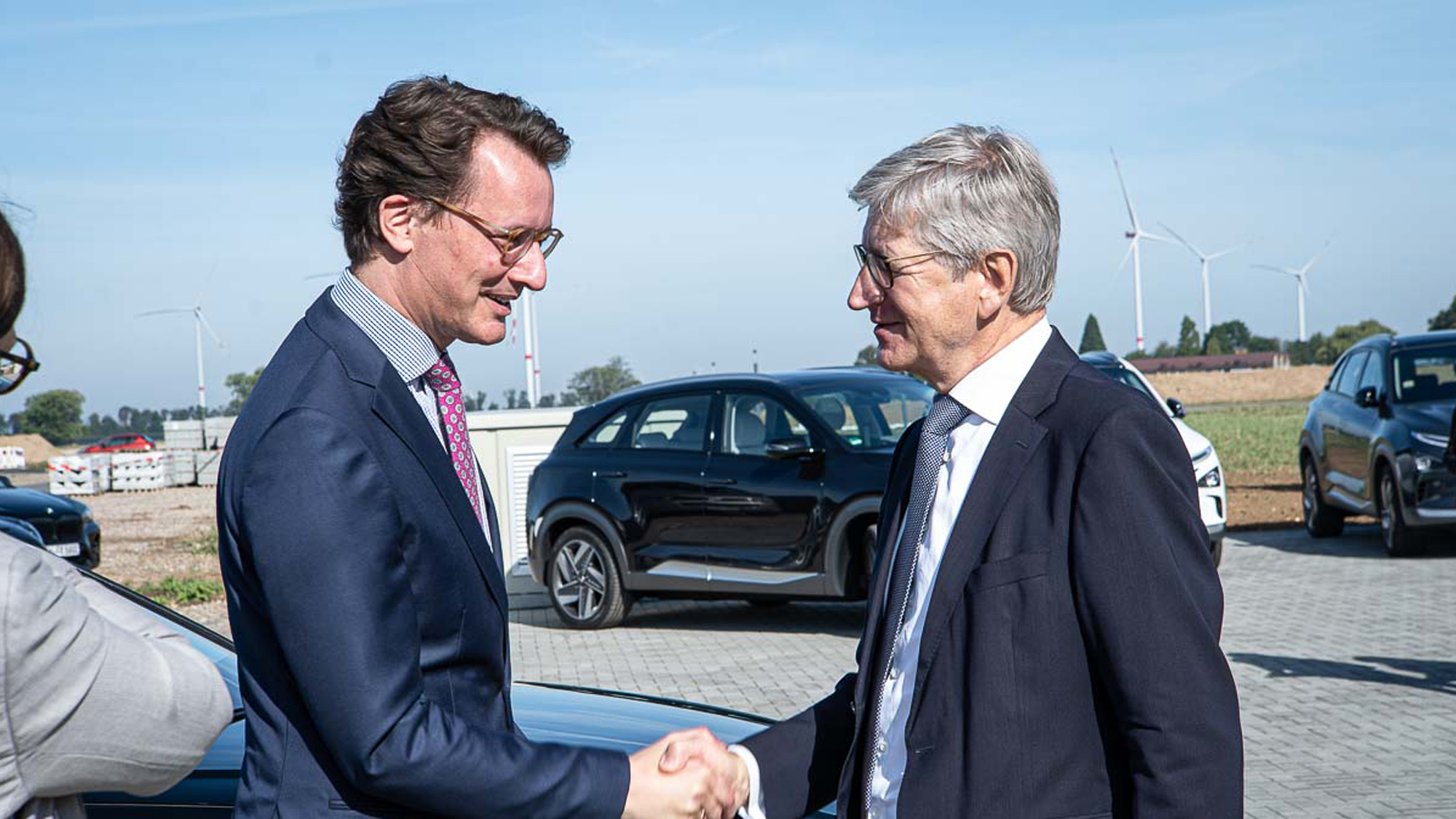
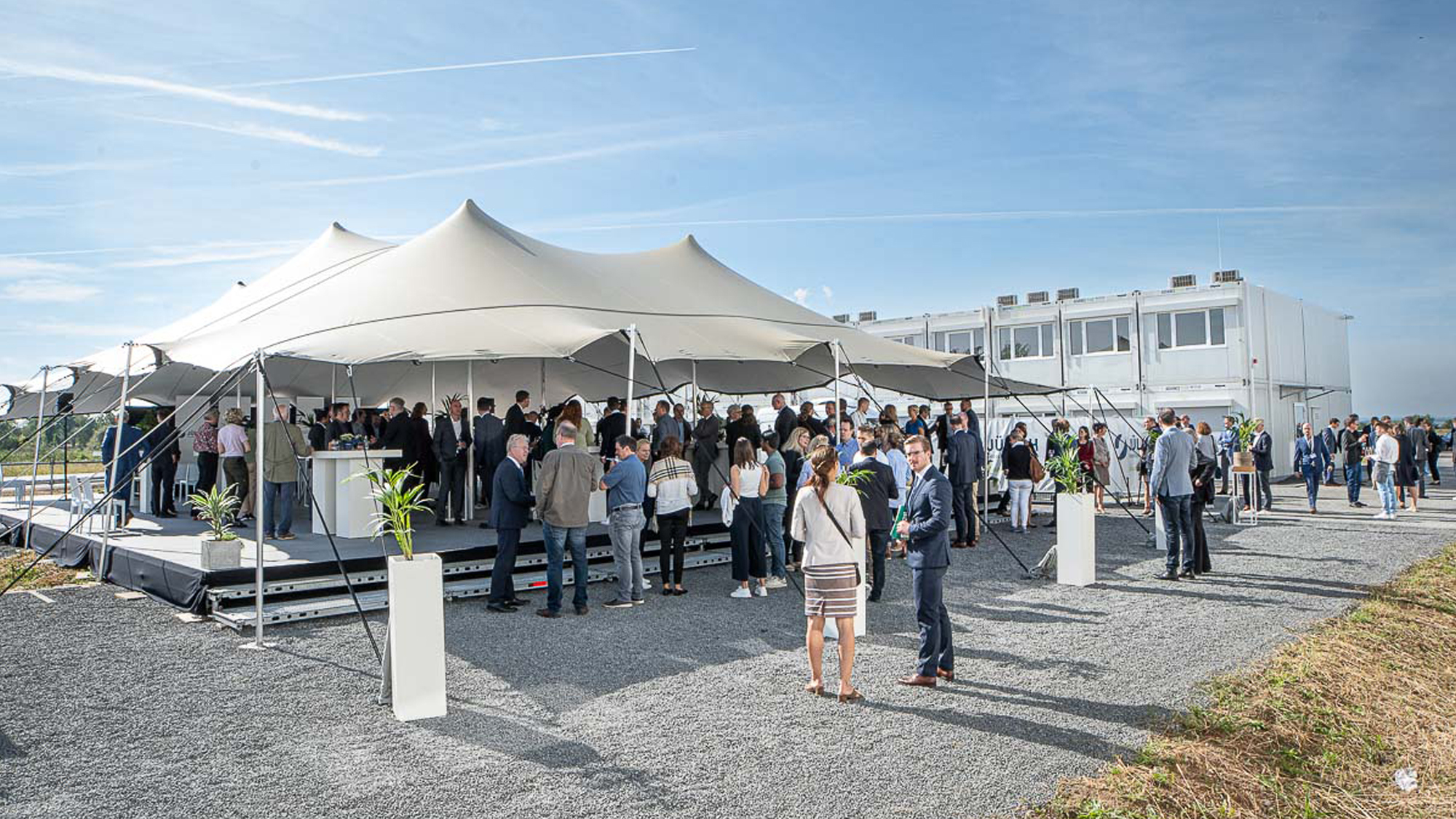
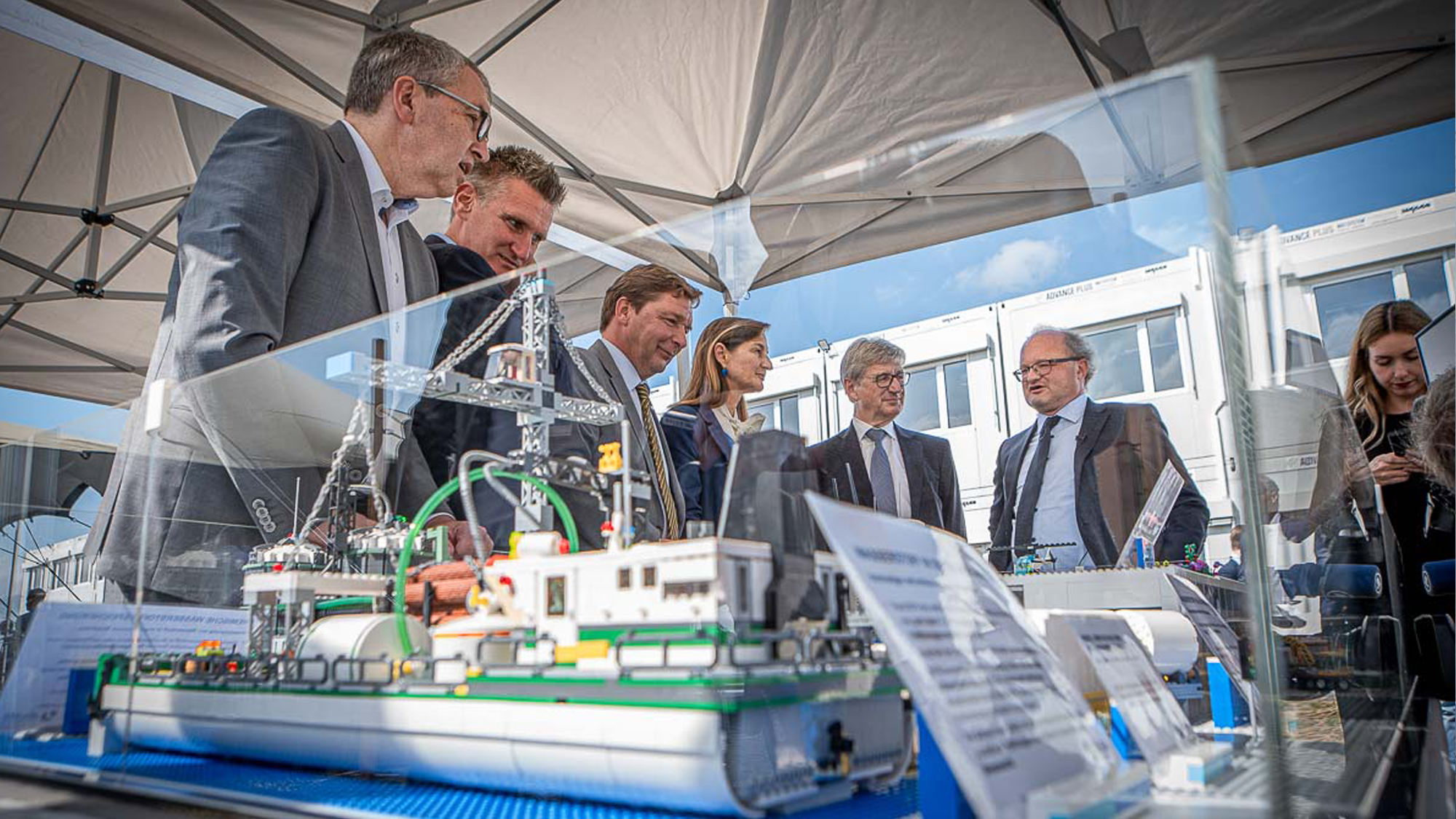
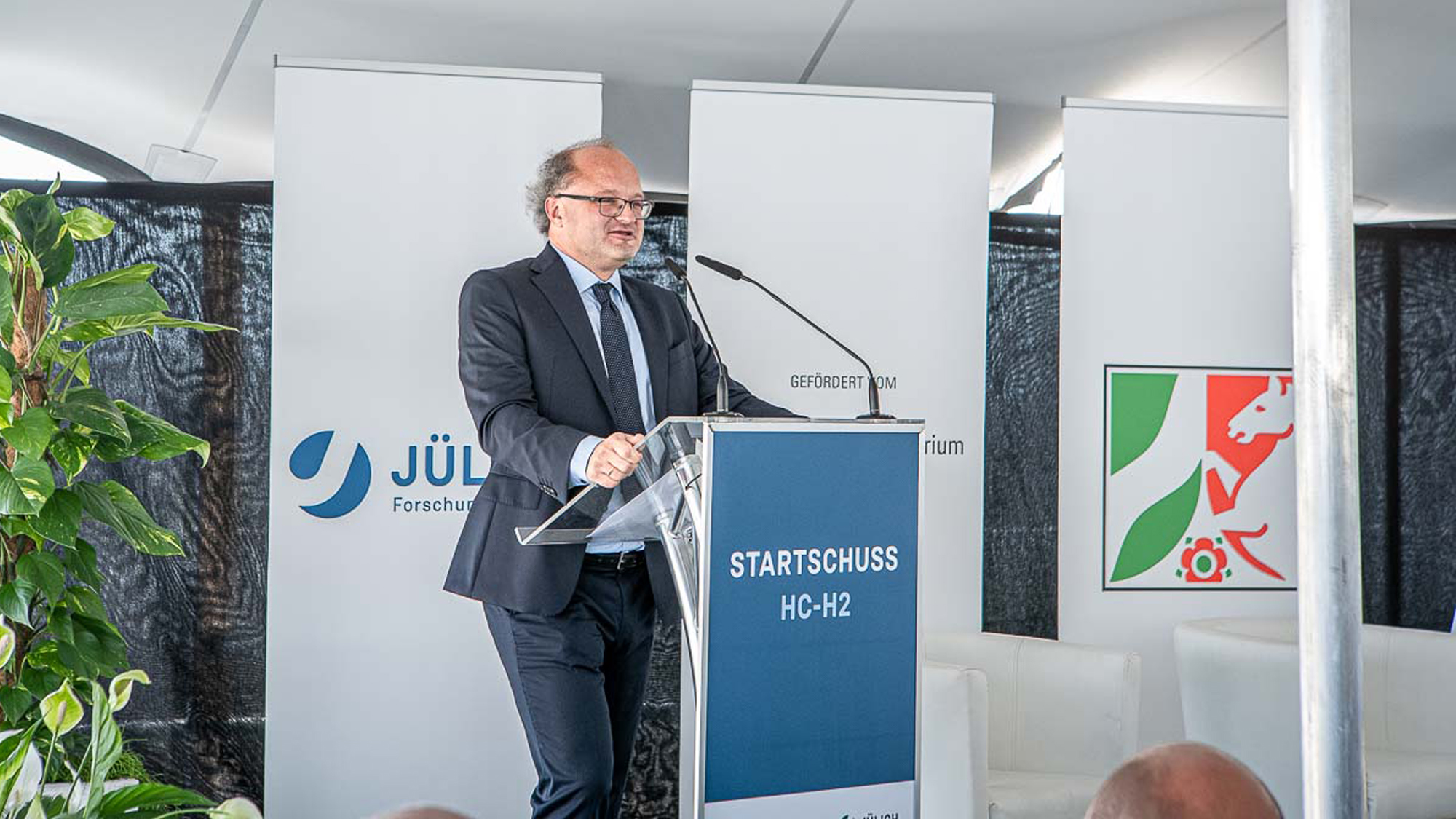
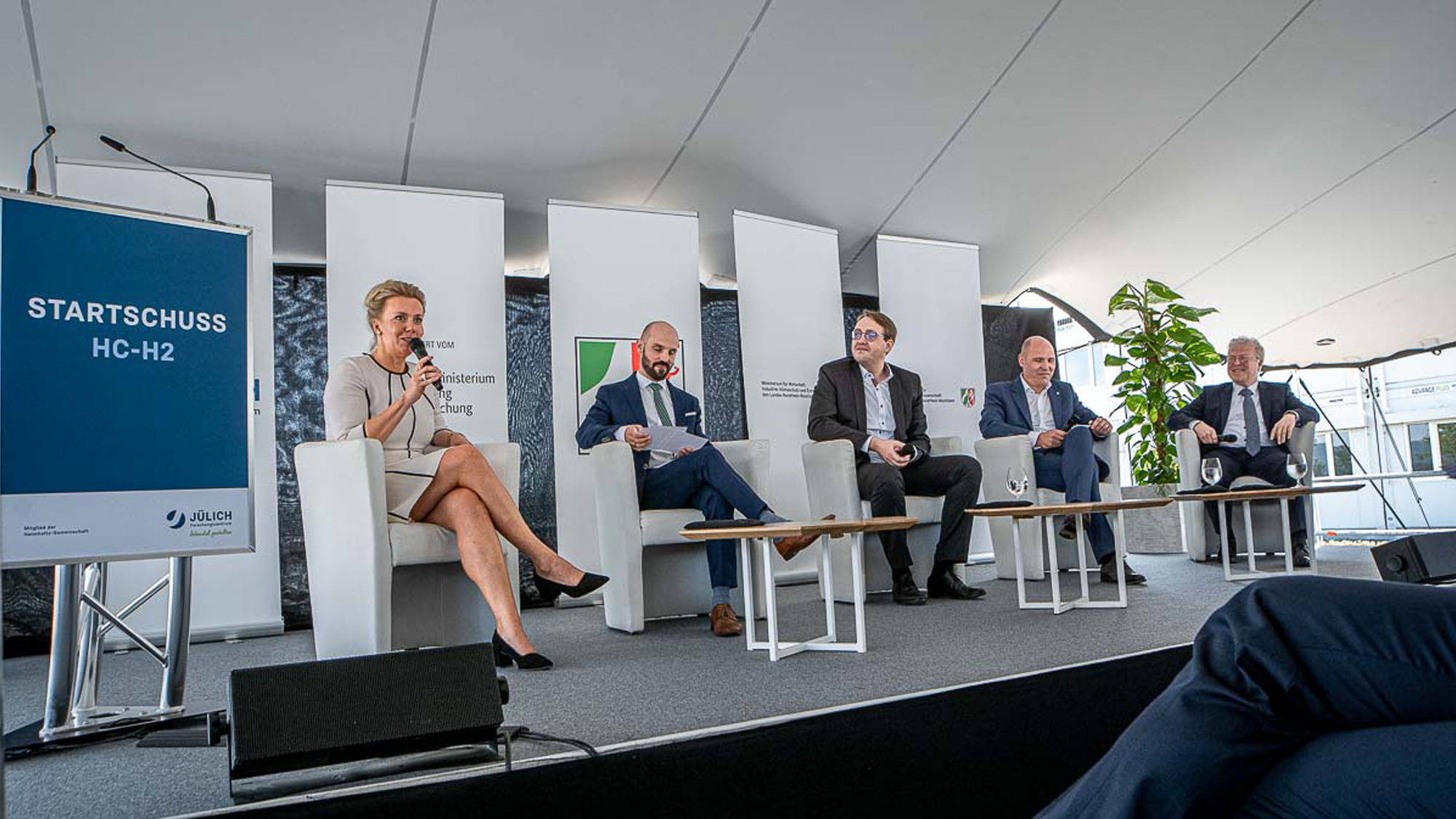
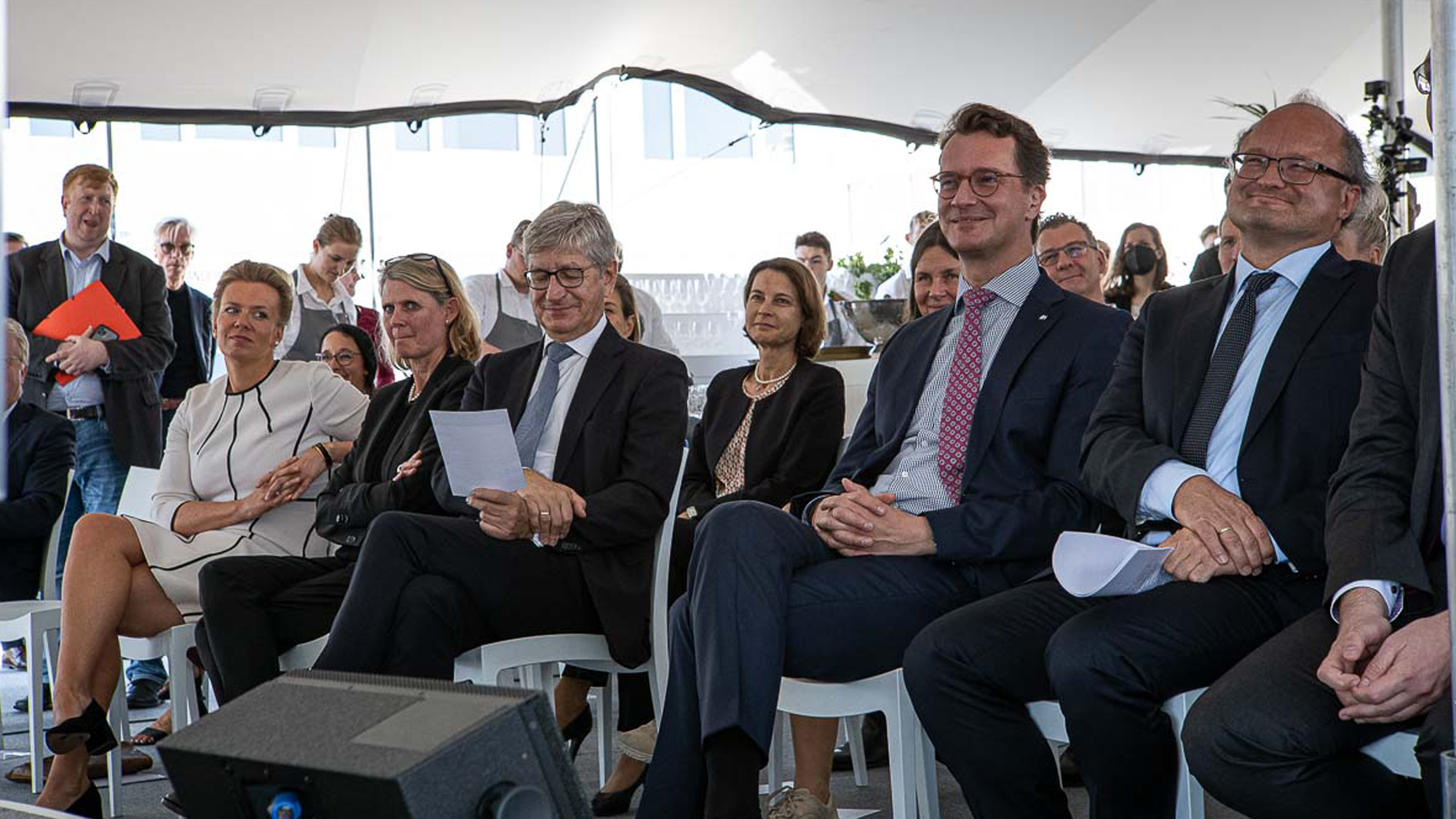
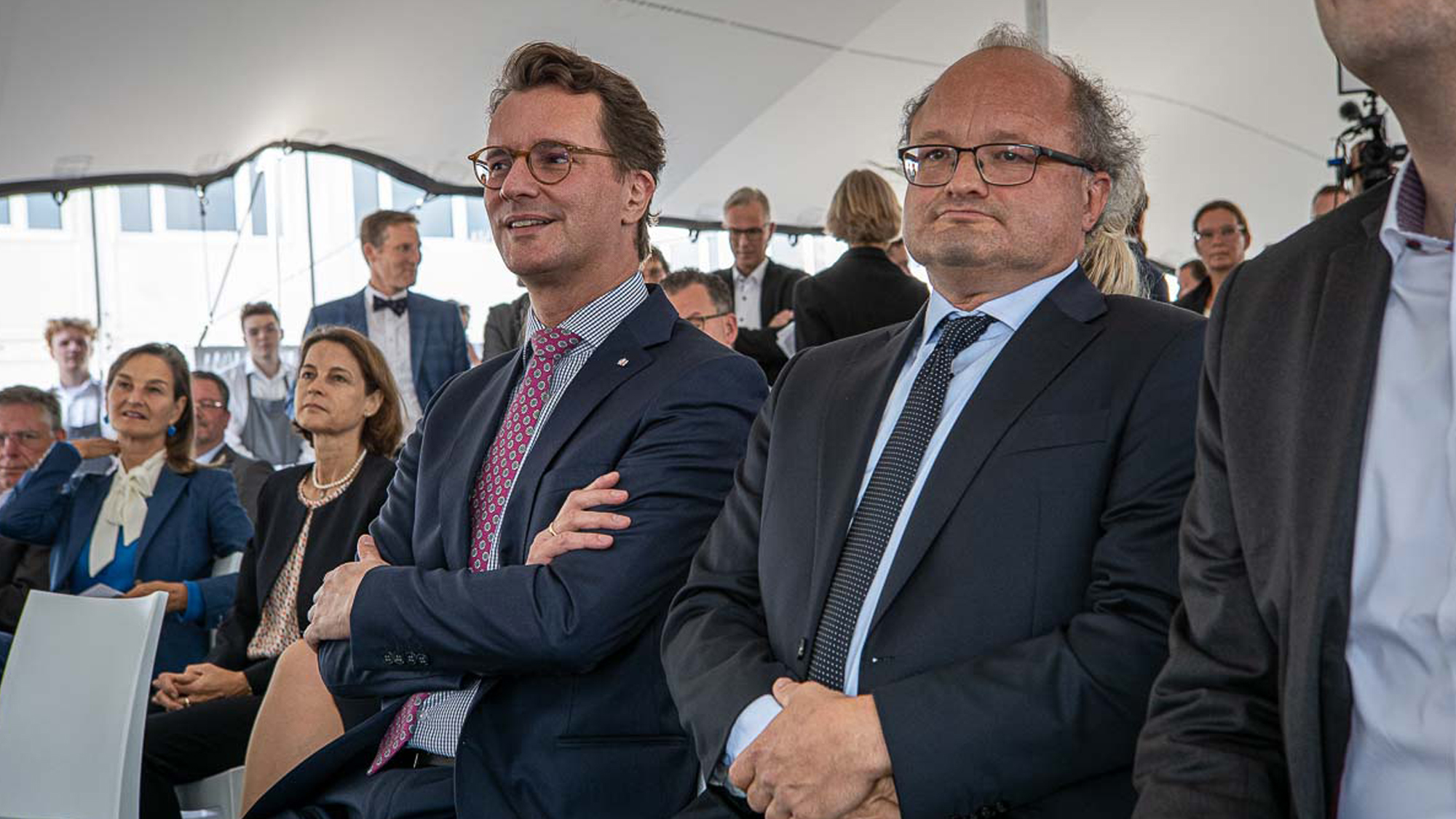
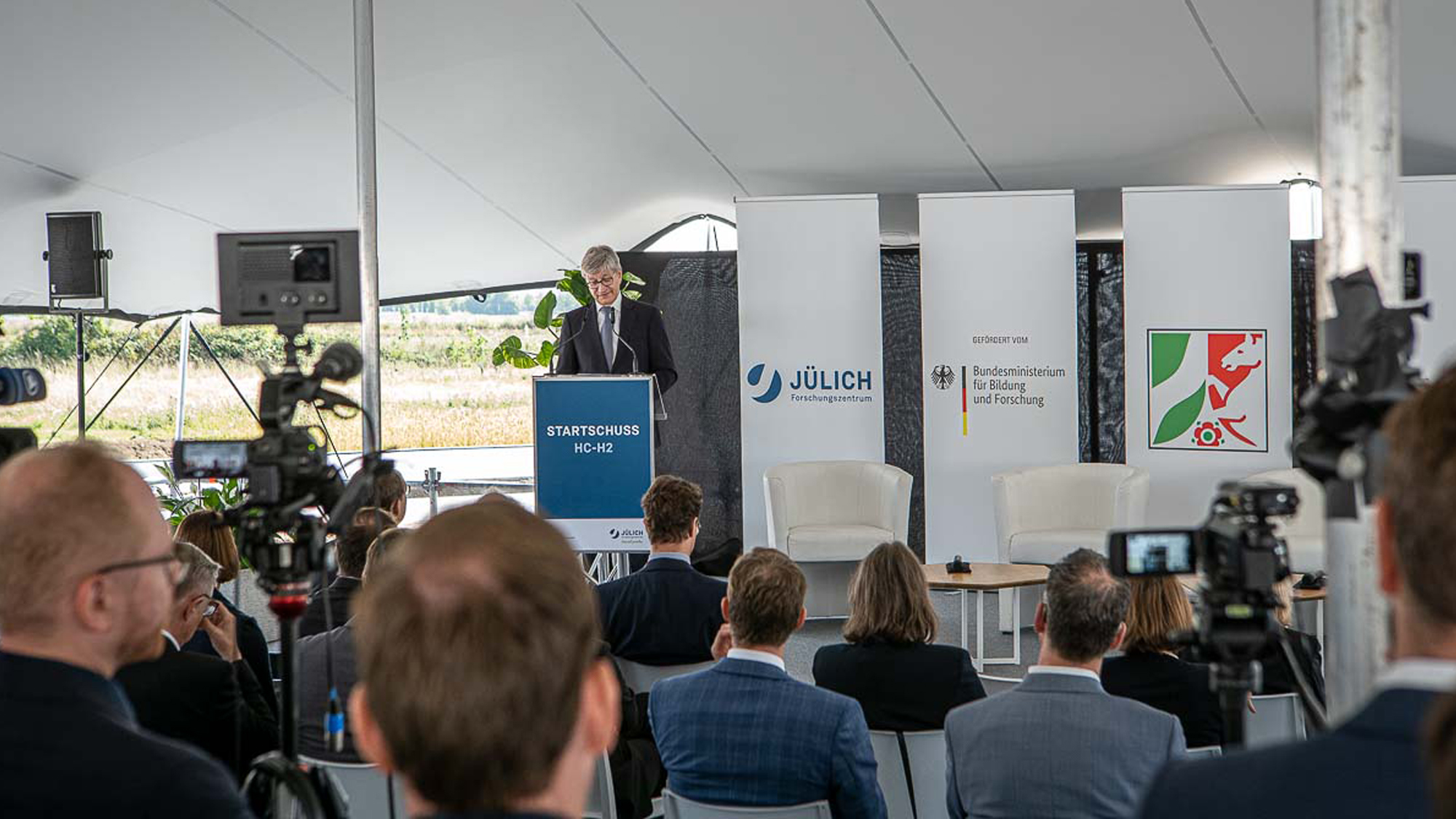
The Helmholtz Hydrogen Cluster HC-H2 aims to provide significant impetus for developing the Rhineland region into a pioneering hydrogen model region. One year after the starting signal, the largest German hydrogen infrastructure project currently underway, coordinated by Forschungszentrum Jülich, celebrated its opening today at Brainergy Park Jülich. Minister President Hendrik Wüst, State Secretary Judith Pirscher from the Federal Ministry of Education and Research, and North Rhine-Westphalia’s Minister of Science Ina Brandes attended the event and learned about the current status and next steps of the project.
The HC-H2 aims to show the world what role hydrogen can play in the energy system of the future: that of an essential energy source that is as commonplace as petrol or diesel and, as a basic material for many industrial products, enables the coupling of energy supply and production, but with little or no impact on the climate. In addition, the cluster is set to become a job engine in the Rhineland region, creating new jobs in the energy industry of the future, where jobs are being lost due to the phase-out of lignite-fired power generation. The Federal Ministry of Education and Research (BMBF) is funding HC-H2 with a total of 860 million euros until 2038. The state of North Rhine-Westphalia is contributing a further 64 million euros to HC-H2 until 2038.
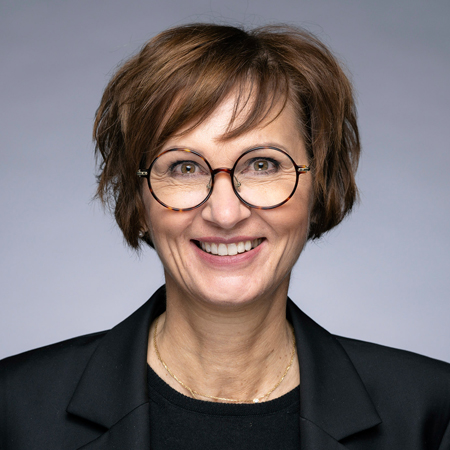
“I want to make Germany a hydrogen republic. Green hydrogen stands for climate protection, energy security and prosperity. The rapid ramp-up of the hydrogen economy is a huge opportunity for Germany. We must seize this opportunity. We want to use innovation to create new jobs and long-term prospects, especially in areas affected by structural change. That is why my ministry is providing a total of 860 million euros in funding for the establishment of the Helmholtz Cluster for a Sustainable and Infrastructure-Compatible Hydrogen Economy. We want to enable new, promising value creation in the Rhineland mining region and strengthen the spirit of innovation throughout the entire region.”
Bettina Stark-Watzinger, Federal Minister of Education and Research © Bundesregierung
This makes HC-H2 the largest structural change project in the Rhineland mining area and the largest individual project in Germany dealing with hydrogen infrastructure.
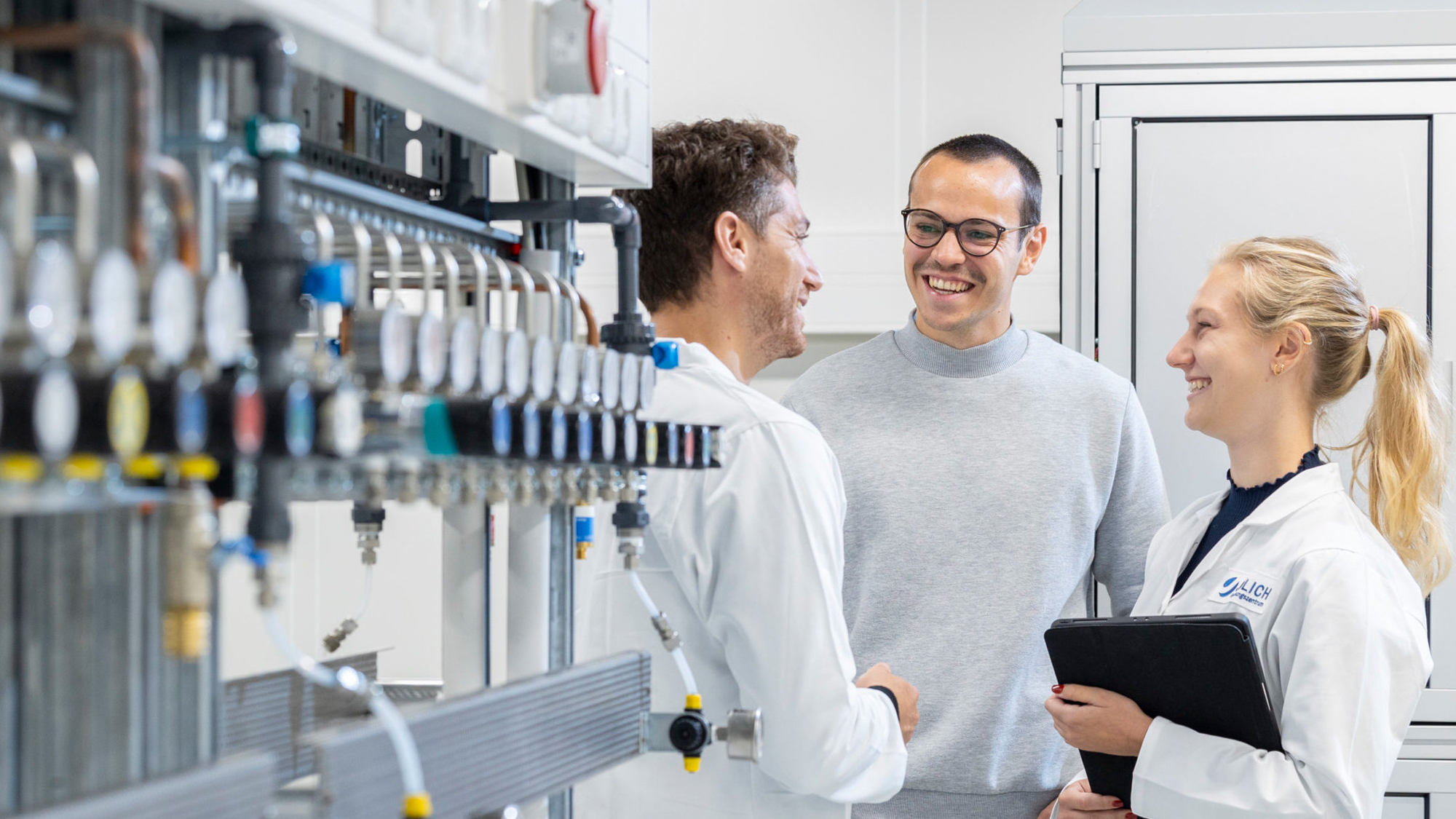
The Helmholtz Hydrogen Cluster is growing steadily. A rapidly expanding team led by hydrogen researcher and founding director Professor Peter Wasserscheid is currently driving forward the development of HC-H2. By 2025, the number of employees is expected to increase to around 400 and continue to rise thereafter. At the heart of HC-H2 is the Institute for Sustainable Hydrogen Economy (INW) at Forschungszentrum Jülich, which was founded in 2021 and is located outside the Forschungszentrum campus in Brainergy Park. The technology and business park currently under construction north of Jülich is set to become a hub for start-ups, new businesses and technological innovations, enabling intensive networking between hydrogen innovation drivers in the region.
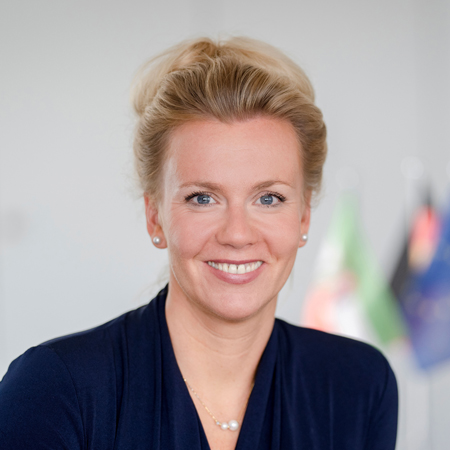
“The HC-H2 hydrogen cluster is an excellent example of how outstanding research results can be quickly translated into practical applications and thus benefit people. In order to further increase the innovative strength of the cluster, we as a state are strongly committed to the construction of a research building with a technical centre specifically designed to meet the needs of HC-H2. The aim is for HC-H2 to become a central building block in the development of a hydrogen model region in the Rhineland.”
Ina Brandes, Minister for Culture and Science of the State of North Rhine-Westphalia
New jobs for scientists and skilled workers will be created in the future, and not only in Jülich. In cooperation with industry, other scientific institutions and local authorities, the construction and operation of large-scale demonstrators is planned at various locations in the Rhineland mining area: Projects are currently being pushed forward in the Aachen urban region, the districts of Düren and Heinsberg, the Rhine district of Neuss, the Rhine-Erft district and the city of Mönchengladbach. Construction of the first plant is scheduled to begin this year. Further projects are planned for the beginning of next year.
The HC-H2 technology demonstration relies on the participation of all relevant stakeholders in the Rhineland mining region. The BMBF is therefore calling for innovative demonstration projects for hydrogen technologies to be developed in cooperation with HC-H2 and implemented in the Rhineland mining region.
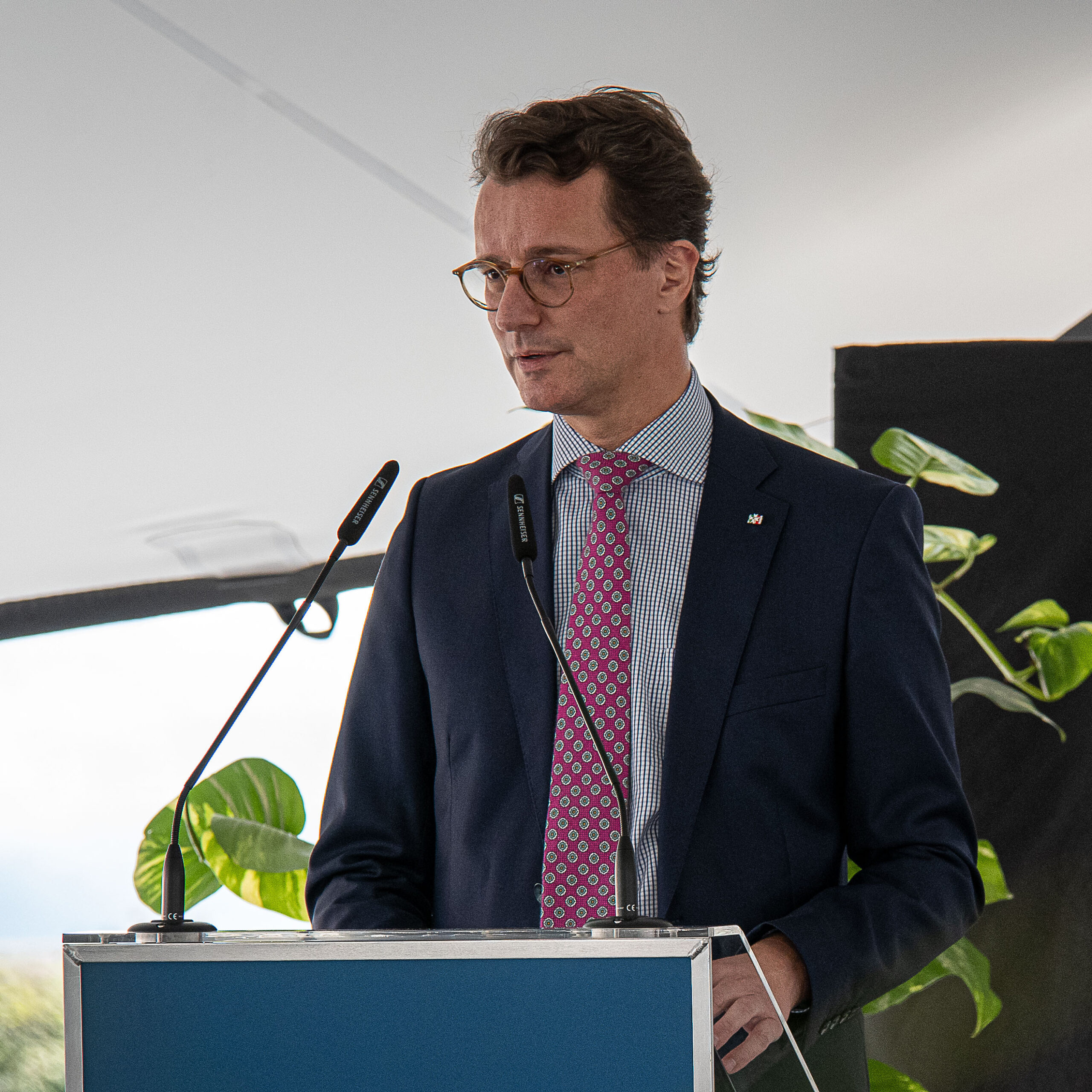
“In North Rhine-Westphalia, we are working on solutions to the major challenges of our time – this is also what the Jülich Research Centre and the Helmholtz Hydrogen Cluster HC-H2 stand for. Together, we have the opportunity to make North Rhine-Westphalia the most modern and climate-friendly industrial location in Europe. In doing so, we want to link research and industry and create impetus for start-ups. Good jobs, social security and the preservation of natural resources go hand in hand and form the basis for the transformation of our state.”
Hendrik Wüst, Minister President of North Rhine-Westphalia
The HC-H2 focuses on technologies that enable hydrogen to be transported and stored as easily, safely and cost-effectively as possible. This usually involves compressing hydrogen to high pressures of up to 700 bar or liquefying it at minus 250 degrees Celsius. This is precisely where HC-H2 comes in. The aim is to demonstrate new storage methods in Jülich and the Rhineland mining area that work without high pressures or low temperatures. Ideally, the innovative methods should be compatible with existing infrastructure such as pipelines, tanks and transporters. This aspiration is also reflected in the name of the “Helmholtz Cluster for Sustainable and Infrastructure-Compatible Hydrogen Economy (HC-H2)”.
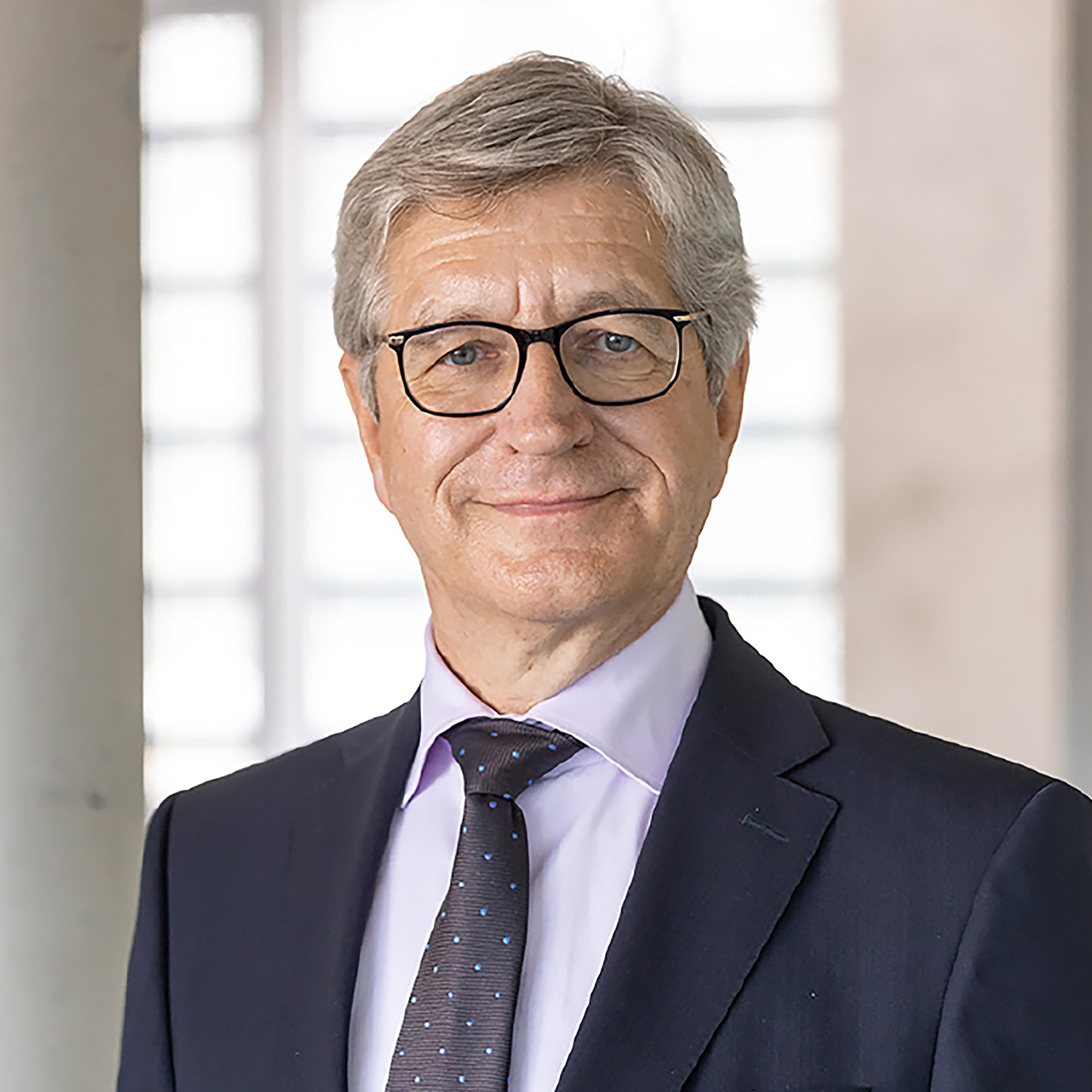
“With the “Helmholtz Cluster for Sustainable and Infrastructure-Compatible Hydrogen Economy”, the Jülich Research Centre is actively involved in the Rhineland region and structural change. It has deliberately chosen to locate itself in Brainergy Park Jülich, an innovation space outside the research centre, in order to build a place of progress and successful structural change in a cooperative and technology-open manner, and to serve the region as a nucleus for an emerging hydrogen economy. A key factor here will be the close links between cooperation partners, which will lead to accelerated innovation processes via demonstrators in a real environment at various locations in the Rhineland region. This will create new jobs and new value chains that will contribute to successful structural change and serve as a model for other regions.”
Prof. Dr. Wolfgang Marquardt, Chairman of the Board of Directors, Forschungszentrum Jülich
Further comments on the opening:
“The Helmholtz Cluster for Sustainable and Infrastructure-Compatible Hydrogen Economy combines research with a strong impetus for structural change. We are therefore calling on companies, research institutions and other organisations to submit ideas for innovative hydrogen demonstration projects. Together, we can shape structural change and exploit the market opportunities offered by promising hydrogen technologies.”
Judith Pirscher, State Secretary at the Federal Ministry of Education and Research
“HC-H2 will research, develop and implement innovative hydrogen technologies. Its unique selling point is its focus on transport and storage technologies that use existing or easily installable infrastructures for green hydrogen. HC-H2’s demonstration projects will serve as a nucleus for new entrepreneurial activities in the Rhineland region.”
Prof. Dr. Peter Wasserscheid, spokesperson for HC-H2
“NEUMAN & ESSER is an enabler for a green H2 value chain – from decarbonisation concepts to the development, construction and servicing of electrolysers, piston compressor systems for transport and storage, hydrogen filling stations and filling systems. We also develop fuel cell systems. With our digital platform ‘XPLORE’ for all components, we offer our customers a complete lifetime solution. By joining forces with science, e.g. HC-H2, and industry, the opportunities offered by structural change can be realised.”
Alexander Peters, Managing Partner, NEUMAN & ESSER GROU

The copyright for the images used on this website is held by Forschungszentrum Jülich, aligator kommunikation GmbH and
stock.adobe.com.